


Request a BPO/BOV
Use the form below to request an initial review of a commercial or multifamily property. Include the address, property type, approximate size or unit count, occupancy, and the decision you are evaluating—sale, refinance, recapitalization, continued hold, or repositioning. Detailed financial and lease records can be discussed after the request is reviewed.
Not sure whether a broker opinion is the right tool or whether the intended use requires an appraisal? Read the in-depth guide below, or submit the request and TFI can help identify the appropriate next step from the property and decision context.
What Is a Commercial Broker Opinion of Value?
A broker opinion of value (BOV)—also commonly called a broker price opinion (BPO)—is a market-based pricing assessment prepared by a licensed real estate broker. In commercial real estate, the terms BOV and BPO are often used interchangeably.
The purpose is practical: help the owner understand what the property may reasonably command, which buyers are most likely to pursue it, and which property-specific issues may affect pricing or execution.
A commercial BOV/BPO may be useful before an owner commits to a sale, but it is not limited to immediate disposition. Owners also use pricing opinions when evaluating refinancing, recapitalization, partnership decisions, capital improvements, estate or portfolio planning, and whether to keep holding the asset.
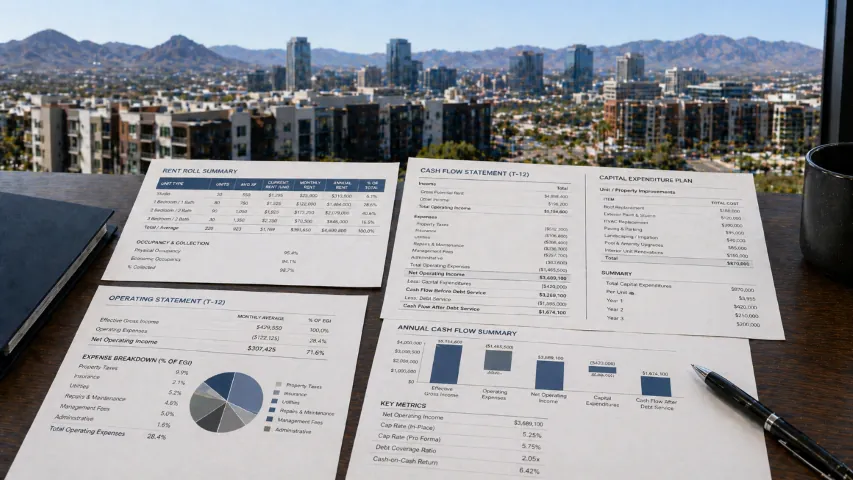
When a BOV or BPO Is the Right Tool
A broker opinion is most useful when the question concerns current marketability and probable pricing, rather than a formal regulatory, lending, tax, or legal requirement.
Common situations include:
- Testing a potential sale price before deciding whether to list
- Comparing a sale, hold, refinance, or recapitalization strategy
- Evaluating whether leasing or operational changes may improve value
- Reviewing an unsolicited offer against current buyer demand
- Establishing an internal planning range for an ownership group
- Understanding how deferred maintenance, vacancy, or lease rollover affects pricing
- Preparing for a 1031 exchange or broader portfolio decision
- Obtaining an updated market perspective after conditions have changed
You do not need to be ready to sell immediately. A useful BOV/BPO should support the decision—not pressure the owner into a transaction.
What TFI Reviews
Commercial value is rarely determined by one cap rate, price-per-square-foot figure, or automated estimate. What we review depends on the property and intended use, but may include:
- Property type, location, access, visibility, zoning, and functional utility
- Current occupancy and tenant composition
- Rent roll, lease terms, escalations, options, and rollover exposure
- Historical and current income and operating expenses
- Net operating income and normalized underwriting assumptions
- Deferred maintenance and near-term capital requirements
- Recent comparable sales and active competing properties
- Market rents, vacancy, absorption, and tenant demand
- Buyer profiles, financing constraints, and return requirements
- Current market liquidity and probable execution risk
The analysis should explain the pricing range and why the market is likely to respond that way.
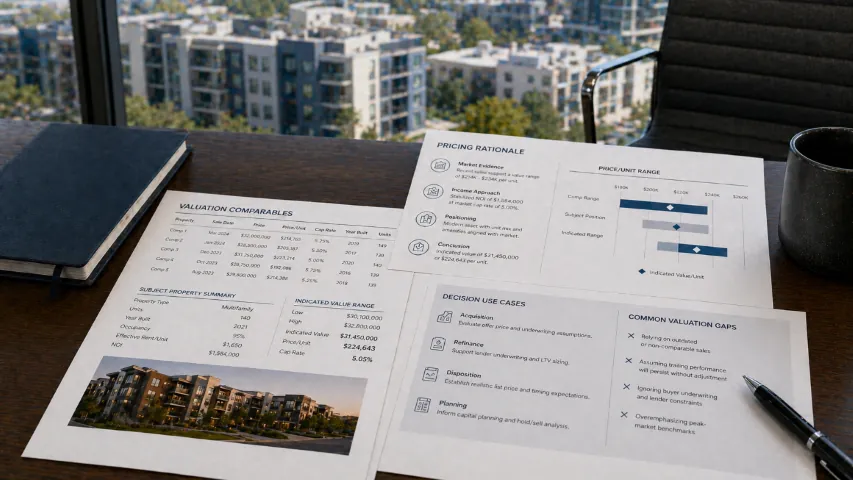
What a Commercial BOV/BPO May Include
The exact deliverable is established before work begins. Depending on the asset, available records, and purpose, it may include:
- A property and ownership-objective summary
- Review of current income, expenses, and lease structure
- Relevant sale, listing, and rental comparisons
- Income-capitalization and sales-comparison perspectives where applicable
- Price-per-square-foot or price-per-unit context
- A current market pricing range or recommended positioning range
- Identification of material strengths, risks, and buyer objections
- Discussion of likely buyer profiles and market depth
- Recommendations for pre-market preparation or further diligence
A BOV/BPO is not an automated valuation. It is a broker’s market judgment based on the available information, current conditions, and the way likely buyers may underwrite the property.
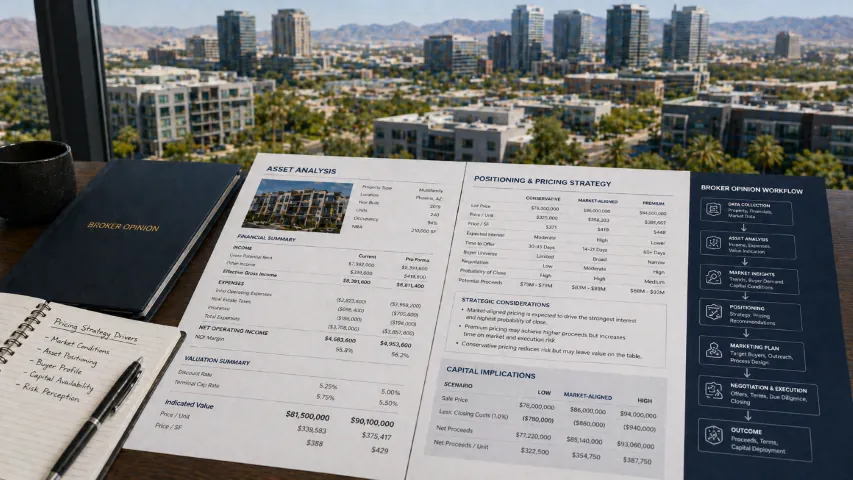
BOV/BPO vs. Commercial Appraisal
A BOV/BPO and a commercial appraisal serve different purposes. The correct tool depends on the intended use and who will rely on the conclusion.
A BOV/BPO is prepared by a real estate broker and is generally used for brokerage, planning, pricing, or internal decision-making. It focuses on how the property may be received by active market participants under current conditions.
A formal appraisal is prepared by a licensed or certified appraiser under applicable appraisal standards. Appraisals may be required by lenders, courts, taxing authorities, estate-planning professionals, government agencies, or other parties that need an independently prepared formal valuation.
A broker opinion and a formal appraisal serve different purposes. When the intended use requires an appraisal, the requesting party should engage an appropriately licensed or certified commercial appraiser.
For a broader explanation of how income durability, buyer underwriting, capital markets, and pricing strategy affect commercial property value, review our Commercial and Multifamily Valuation and Pricing Strategy page.
Commercial and Multifamily Property Types
TFI may evaluate a range of income-producing and owner-user properties, including:
- Multifamily and apartment properties
- Office and medical-office buildings
- Industrial, warehouse, and flex properties
- Retail and service-commercial properties
- Mixed-use assets
- Commercial land and development sites
- Owner-user buildings
- Smaller portfolios or multiple-property ownership decisions
Property type matters because buyers value different assets through different lenses. A multifamily property may turn heavily on rent-roll quality, expenses, and unit-level operating performance. An industrial or owner-user property may depend more on functionality, loading, power, yard area, access, and replacement alternatives. Office and retail assets may be particularly sensitive to tenant credit, lease rollover, concessions, and capital requirements.
Greater Phoenix Area, Arizona, and Select National Assignments
The Greater Phoenix Area and Arizona are TFI’s core market. Local submarket conditions, property use, tenant demand, replacement cost, buyer depth, and capital availability can produce materially different pricing outcomes even within the same metropolitan area.
TFI Real Estate Advisors supports owners, investors, landlords, tenants, and developers across the Greater Phoenix Area and Arizona, with selective national reach for larger commercial, multifamily, investment, and capital-driven assignments where the scope and structure support the engagement.
Commercial BOV/BPO requests may involve properties in Phoenix, Scottsdale, Tempe, Mesa, Chandler, Gilbert, Glendale, Peoria, Goodyear, Surprise, Buckeye, Queen Creek, and other Greater Phoenix Area communities. The analysis is tied to the property’s actual competitive set rather than a citywide average.
For assignments outside Arizona, the appropriate scope, local-market resources, brokerage relationships, and licensing requirements must be evaluated before engagement.
Information That Helps Us Evaluate the Request
An initial conversation can begin with limited information, but a more useful pricing review generally requires accurate property and operating data. Helpful materials may include:
- Property address and parcel number
- Property type, building size, land area, or unit count
- Current rent roll or lease summary
- Trailing operating statement, profit-and-loss statement, or income and expense history
- Vacancy and delinquency information
- Major lease expirations, options, or known tenant issues
- Recent capital improvements and deferred maintenance
- Existing debt or refinance timing when relevant to the decision
- Ownership objective and expected decision timeline
Sensitive records should be shared only through an agreed method after the initial request is reviewed. Do not send confidential tenant, banking, tax-identification, or personally identifying information through the general website form.
Scope, Cost, and Brokerage Relationship
Not every request requires the same level of work. Scope and compensation can vary based on the intended use, property complexity, available information, geographic coverage, required inspections, and whether the BOV/BPO is part of a potential brokerage engagement.
Some preliminary pricing discussions may be handled as part of an owner consultation. A more detailed written analysis, portfolio review, complex scenario analysis, or assignment outside the core market may require a defined advisory or brokerage scope. Any applicable terms, agency relationships, compensation, and disclosures should be confirmed before substantive work begins.
A broker opinion is prepared as part of licensed real estate brokerage services. It is not an appraisal, a guarantee of sale price, or a substitute for legal, tax, accounting, engineering, environmental, or appraisal advice.
Frequently Asked Questions About Commercial BOVs and BPOs
Are BOV and BPO the same thing?
The terms are commonly used interchangeably. In commercial real estate, broker opinion of value or BOV is often the more natural term, while broker price opinion or BPO is also widely recognized. Both refer to a broker-prepared pricing opinion rather than a formal appraisal.
Do I need to be ready to sell before requesting one?
No. Owners often request a pricing perspective before deciding whether to sell, hold, refinance, recapitalize, improve, or reposition a property. The purpose is to improve the decision before committing to a transaction.
Can a BOV/BPO be used for a loan, tax appeal, estate, or legal matter?
Possibly not. The lender, attorney, accountant, court, government agency, or other requesting party determines what type of valuation is acceptable. When a formal appraisal is required, a broker opinion should not be used as a substitute.
How accurate is a commercial BOV/BPO?
Its usefulness depends on the quality of the property information, the relevance of the market evidence, the broker’s judgment, and how quickly market conditions are changing. It is an informed pricing opinion—not a guarantee of what a buyer will pay or what a lender or appraiser will conclude.
Will the property need to be inspected?
That depends on the property and requested scope. A site visit can materially improve the analysis when condition, functionality, deferred maintenance, access, tenant improvements, or land characteristics affect marketability. An initial discussion can occur before an inspection is scheduled.
What happens if I decide to sell?
If a sale appears appropriate, the BOV/BPO can become the starting point for a more detailed Commercial Seller-Representation and Disposition Strategy. The listing scope, marketing process, pricing strategy, agency relationship, and compensation are addressed separately.
Can TFI review multifamily property?
Yes. Multifamily analysis may include rent-roll quality, occupancy, bad debt, concessions, operating expenses, unit mix, market rents, capital needs, and buyer underwriting. Owners can also review TFI’s broader Multifamily Advisory Approach.