


Define What the Sale Must Accomplish
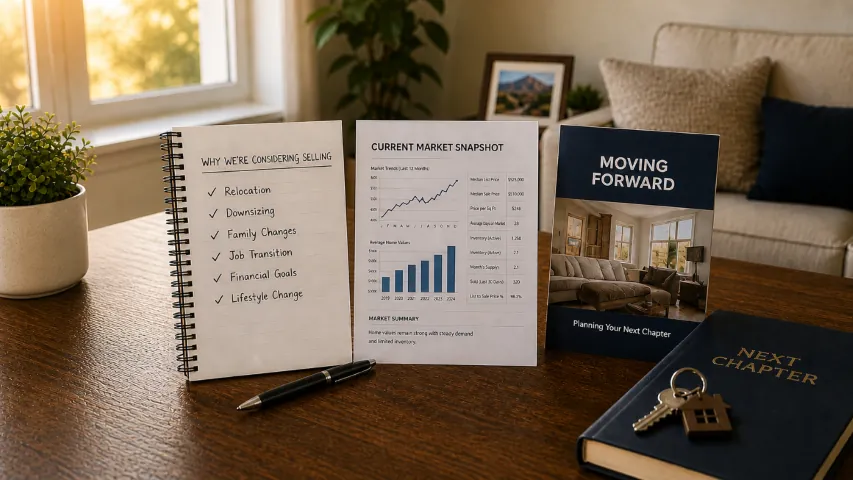
Selling a home is simultaneously a financial transaction, a marketing assignment, and often part of a larger life transition. Before you select a price or schedule photography, define what the sale needs to accomplish.
Your objective may involve relocation, downsizing, estate administration, divorce, a purchase that depends on sale proceeds, relief from a major maintenance burden, or a decision to put equity to another use. Timing, the need for certainty, tolerance for repairs, and the next-housing plan can materially change the recommended strategy.
Estimate Net Proceeds and Transition Costs
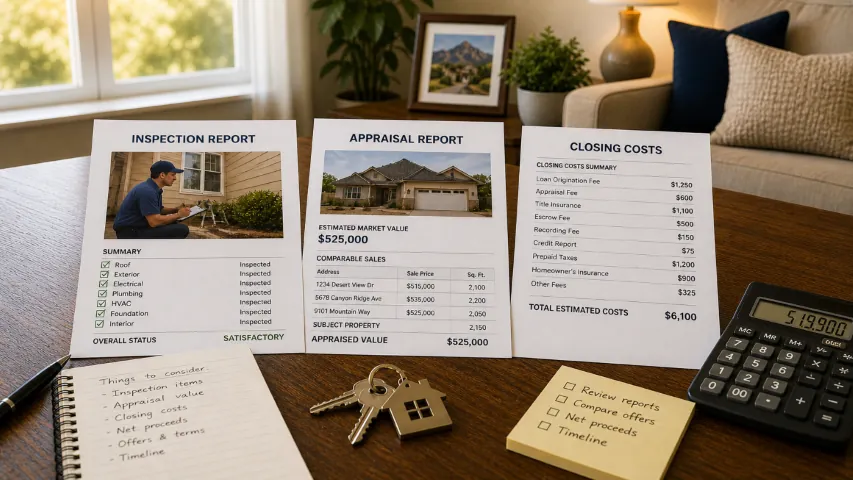
The list price is not the amount you receive. A useful early estimate accounts for mortgage and lien payoffs, brokerage compensation, title and escrow charges, prorated taxes, HOA-related charges where applicable, repairs, concessions, moving costs, temporary housing, and any other transaction-specific obligations.
Tax consequences can also matter, but they depend on facts outside the brokerage assignment. Sellers with questions about capital-gain exclusions, basis, depreciation, estate issues, or residency should consult a qualified tax professional before relying on projected proceeds.
Decide Whether to Sell Before Buying
Selling first may provide clearer purchasing power and reduce the risk of carrying two properties. Buying first may reduce temporary-housing pressure but can increase financing, timing, and contingency risk. Leasebacks, extended possession, bridge financing, sale contingencies, and temporary housing each involve tradeoffs rather than universal solutions.
Choose Representation and Understand the Listing Agreement
A listing agreement should define the broker's services, the term of the engagement, compensation, marketing authority, access procedures, cancellation provisions, and other responsibilities. Brokerage compensation is negotiable and is not set by law.
The National Association of REALTORS® provides a current consumer guide to listing agreements explaining common agreement structures and questions sellers should ask. Arizona sellers should review the actual agreement they are asked to sign and raise unclear terms before authorizing the listing.
A seller may also decide whether to authorize an offer of buyer-broker compensation or provide concessions toward specified buyer costs. Those are separate decisions. A concession can help with buyer closing costs, repairs, or other negotiated expenses; buyer-broker compensation concerns brokerage services. Neither should be treated as mandatory, and each should be evaluated against likely buyer demand, net proceeds, and the complete offer.
Prepare the Property and the Information Buyers Will Need
Preparation should begin with condition, safety, documentation, and buyer perception—not with an assumption that every visible surface must be renovated.
Repairs, Improvements, and As-Is Positioning
Unresolved roof, HVAC, plumbing, electrical, water-intrusion, pool, or safety issues can create more transaction risk than dated finishes. Cosmetic work may improve presentation, but the expected benefit should be compared with cost, delay, disruption, and the possibility that a buyer would have chosen differently.
An as-is sale does not eliminate disclosure obligations or prevent a buyer from conducting due diligence. It generally means the seller is not promising to make repairs merely because a condition is discovered. The actual contract controls the parties' rights.
Presentation and Marketing Readiness
Decluttering, cleaning, landscape attention, lighting, minor touchups, and thoughtful furniture placement can make the property's condition and space easier to understand. Professional photography, accurate descriptions, floor plans or virtual media where appropriate, and coordinated showing access support the launch.
Preparation should also include practical matters: securing valuables and medications, controlling access information, planning for pets, deciding how occupied showings will work, and identifying any surveillance or recording devices that require disclosure or special handling.
Gather Records Before the Listing Is Active
Useful records may include permits, warranties, repair invoices, insurance claims, inspection reports, solar agreements, leases, service contracts, surveys, well or septic information, HOA documents, and information about additions or alterations. Early document review can expose issues while there is still time to investigate them.
Arizona Seller Disclosures
Arizona sellers generally must disclose known material facts about the property even when a buyer does not ask and even when the parties do not use a particular disclosure form. The Arizona REALTORS® Seller's Property Disclosure Statement and Seller Advisory are commonly used to help organize that information.
The seller should answer from actual knowledge, avoid guessing, update information when circumstances change, and attach available supporting records where useful. The disclosure process does not replace the buyer's independent investigation, and a real estate broker should not answer technical, legal, engineering, environmental, insurance, or tax questions outside the broker's competence.
Known facts concerning water intrusion, roof or structural conditions, additions, insurance claims, pests, utilities, environmental issues, boundaries, liens, leases, solar obligations, HOA matters, and other conditions may be material depending on the property and transaction. When the disclosure question is uncertain or potentially consequential, legal advice is appropriate.
Build the Pricing and Launch Strategy
The initial list price should be supported by recent comparable sales, active competition, pending activity where reliable information is available, property condition, location, lot and improvements, current buyer demand, financing conditions, and the seller's objectives.
A list price is a marketing and negotiation decision. It is not an appraisal and does not guarantee the final price. The separate Pricing Strategy Guide explains how comparative market analysis, search ranges, competition, and early market response fit together.
Marketing Is More Than Distribution
Effective exposure places accurate property information in front of the likely buyer pool and gives buyers a reason to act. The strategy may involve the MLS, major consumer portals, broker-to-broker outreach, signage, open houses, targeted digital distribution, direct outreach, or controlled exposure depending on the property and seller's privacy needs.
Broader exposure is not automatically better in every assignment, but reduced exposure has a cost: fewer buyers can evaluate the property. A private or limited-distribution strategy should be an informed seller choice rather than a claim that secrecy itself creates value.
Evaluate the Complete Offer
The highest price may not produce the strongest net result or the highest probability of closing. Compare the full package:
- Earnest money and the buyer's financing or proof of funds
- Down payment and appraisal-gap capacity
- Inspection, financing, appraisal, sale-of-home, and other contingencies
- Requested concessions, repairs, personal property, or buyer-broker compensation
- Closing date, possession, leaseback, and transition terms
- Title, HOA, and property-specific requirements
- The buyer's documentation, responsiveness, and execution risk
A cash offer can remove lender underwriting and appraisal requirements, but it is not automatically superior. A financed offer can be strong when the buyer is well prepared, the terms are clear, and the price is supportable.
Multiple Offers Require a Deliberate Process
A seller may accept, reject, counter, or invite revised offers, subject to the contract and broker's duties. The seller should understand how the listing broker will communicate the process and avoid using personal information about buyers in a way that creates fair-housing risk. Price, terms, financial capacity, and objective transaction factors should drive the decision.
Under Contract: Escrow, Due Diligence, and Appraisal
Once a contract is accepted, the transaction moves from marketing into execution.
Buyer Inspections and Requests
The buyer may conduct a general home inspection and other investigations allowed by the contract. The resulting request can seek repairs, credits, a price adjustment, additional documentation, specialist evaluation, or cancellation where the contract permits.
The seller should evaluate the cost, disclosure implications, future marketability, likelihood of closing, and alternatives. Rejecting every request can be as shortsighted as accepting every request. Any agreed work should be documented clearly, completed by appropriate parties, and supported by receipts, warranties, permits, or specialist reports where applicable.
Appraisal and Financing Risk
When a lender requires an appraisal, a low value can affect the buyer's loan and trigger renegotiation or other contract rights. The seller's response depends on the appraisal terms, buyer resources, comparable evidence, market conditions, and whether another buyer is likely to encounter the same issue.
The buyer's lender may also continue verifying income, assets, credit, insurance, and property eligibility through closing. An early preapproval reduces uncertainty but does not eliminate final underwriting risk.
Title, HOA, and Closing Conditions
Escrow and title coordination can involve payoff statements, liens, judgments, ownership documents, HOA disclosures, prorations, affidavits, repairs, lender conditions, and signing requirements. Sellers should respond promptly and avoid moving, changing ownership, opening new liens, or making material property changes without considering the transaction consequences.
Closing, Recording, and Possession
Signing is not necessarily the same event as closing. In Arizona, the transaction generally closes when the deed and required documents are recorded and funds are disbursed according to escrow instructions. Possession follows the contract, not an informal assumption that keys transfer whenever documents are signed.
Before closing, confirm moving arrangements, utility transitions, property condition, agreed personal property, access devices, final cleaning, possession timing, and any leaseback obligations. Independently verify wiring instructions using a known telephone number before sending funds or acting on changed instructions.
Common Seller Mistakes
Common avoidable problems include pricing from personal need rather than market evidence, completing expensive improvements without testing likely return, hiding or minimizing known facts, accepting an offer based only on price, failing to estimate net proceeds, letting the property deteriorate during escrow, and waiting too long to plan the next move.
Another mistake is treating buyer feedback as a verdict on the seller or the home. Feedback is market information. It should be evaluated for patterns and credibility, then used to decide whether price, condition, presentation, access, or terms require adjustment.

Frequently Asked Questions
How long does it take to sell a home in Arizona?
There is no reliable universal timeline. Preparation, property type, location, price range, condition, inventory, buyer demand, financing, and contract terms all affect the process. Separate the time needed to prepare and market the property from the time needed to complete an accepted contract.
Must an Arizona seller complete an SPDS?
Arizona sellers generally have a duty to disclose known material facts. The Arizona REALTORS® SPDS is commonly used to organize those disclosures, but the legal duty is broader than a single form. Contract terms and exemptions can vary, so specific questions should be reviewed with the broker and, where appropriate, an attorney.
Should I make repairs before listing?
Prioritize safety, function, active damage, and conditions likely to disrupt financing, insurance, inspection, or buyer confidence. Cosmetic improvements should be evaluated against cost, timing, likely buyer preference, and the as-is alternative.
Is the highest offer always the best offer?
No. Financing strength, contingencies, concessions, appraisal exposure, closing and possession terms, buyer documentation, and the probability of performance can outweigh a higher headline price.
Can a seller still offer buyer-broker compensation or concessions?
A seller may evaluate negotiated compensation and concessions subject to current law, MLS rules, brokerage agreements, and the purchase contract. They are not the same thing, and neither is automatically required. The seller should understand the expected cost, purpose, and effect on net proceeds.
What happens if the home does not appraise at the contract price?
The outcome depends on the contract. The parties may proceed, challenge or supplement the appraisal where permitted, adjust price or terms, contribute additional cash, or terminate if a contractual right applies. The appraisal is one transaction event, not an automatic command to accept a particular price.
When Pausing or Changing Course Is Rational
A seller may need to reassess when the property receives little qualified activity, repeated feedback identifies the same issue, insurance or title problems emerge, the next move is no longer feasible, or price reductions would no longer support the seller's objectives.
The choices may include changing price or terms, improving presentation, completing targeted repairs, revising access, temporarily withdrawing, renting the property, or choosing a different disposition path. The correct response depends on the seller's constraints and current evidence—not on preserving a listing strategy after the facts have changed.
Continue Learning
Previous: Owning a Home
Next: Pricing Strategy
For direct representation, review Residential Seller Representation.
Back to: Consumer Education Hub