


What TFI Provides to Home Buyers
Buyer representation is more than opening doors or sending listings. TFI Real Estate Advisors helps you evaluate the purchase as both a personal decision and a significant financial commitment through a structured, broker-led process.
The work may include:
- Clarifying budget, timing, location, lifestyle, and property priorities
- Coordinating with the buyer’s chosen lender and reviewing financing readiness
- Identifying on-market, new-construction, and other appropriate opportunities
- Comparing neighborhoods, communities, property types, and ownership costs
- Reviewing comparable sales, active competition, condition, and resale considerations
- Structuring offers around price, financing, timing, contingencies, and seller priorities
- Coordinating inspections, title, appraisal, lender requirements, and contractual deadlines
- Negotiating repairs, credits, price adjustments, and other transaction terms
- Helping the buyer maintain perspective when market pressure or emotion increases
The model is direct and broker-led. We help you understand the tradeoffs, protect your negotiating position, and make choices that still look sound after the pressure of the transaction has passed.
Buyer Representation Begins Before the Home Search
Your financial position, timeline, risk tolerance, and flexibility shape the search long before you select a property.
A productive first consultation establishes a comfortable payment and cash requirement, lender readiness, preferred areas, commute and lifestyle priorities, must-have features, acceptable compromises, and major deal breakers. It should also address resale versus new construction, HOA and solar considerations, pools and maintenance, property age, expected ownership duration, and your tolerance for repair or renovation.
That groundwork keeps the search focused and gives you a consistent basis for comparing properties.

Financial Preparation and Comfortable Affordability
A lender’s maximum approval is not automatically a comfortable purchase. Evaluate the full cost of ownership, including the down payment, closing funds, principal and interest, taxes, insurance, HOA fees, utilities, pool and landscape maintenance, solar obligations, expected repairs, and the lifestyle costs associated with the location.
A conservative budget leaves room for ordinary life and future uncertainty. Buyers who need a lender conversation can begin with the Financing Preparation resource before the property search becomes urgent.
How the Home-Buying Process Unfolds
Most purchases follow a recognizable sequence. When you understand it early, you can prepare for decisions instead of reacting to each deadline as it arrives.
The process generally includes:
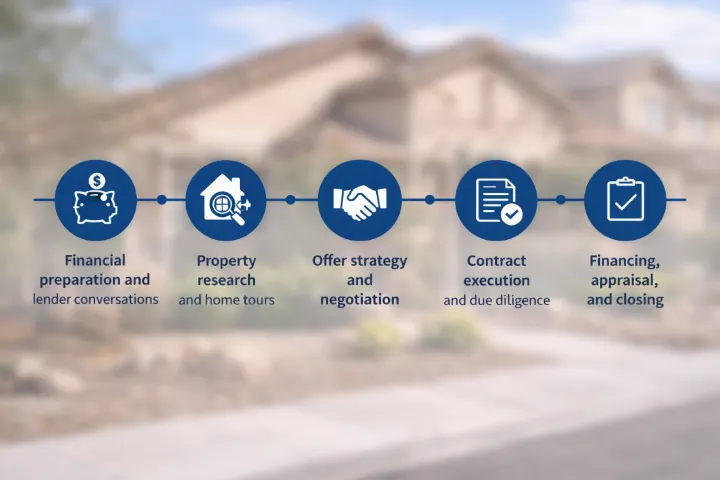
- Buyer consultation and representation agreement
- Financing preparation and proof of funds
- Property and neighborhood search
- Property evaluation and comparable-market review
- Offer strategy and contract negotiation
- Inspection and due diligence
- Appraisal, title, insurance, and loan finalization
- Final walkthrough and closing
Each step affects the next. A financing delay can weaken an offer. A poorly defined search can waste time. An overly aggressive offer can create appraisal or inspection risk. The process works best when those decisions are connected from the beginning.
Greater Phoenix Area Market and Neighborhood Strategy
The Greater Phoenix Area is not one uniform housing market. Values, inventory, property age, HOA structures, taxes, insurance considerations, commute patterns, school boundaries, new-construction supply, and buyer competition can change substantially from one city or neighborhood to the next.
TFI serves buyers throughout Phoenix, Scottsdale, Paradise Valley, Tempe, Mesa, Chandler, Gilbert, Glendale, Peoria, Surprise, Goodyear, Avondale, Buckeye, Queen Creek, Fountain Hills, Cave Creek, and surrounding communities.
A useful search compares more than city names. You may be weighing West Valley, central Phoenix, Scottsdale, and Southeast Valley alternatives; established neighborhoods and master-planned communities; resale homes and builder inventory; or single-family, condominium, townhome, patio-home, and age-restricted ownership. The right choice depends on commute, daily routine, ownership costs, property condition, future flexibility, and your priorities.
How Buyers Should Evaluate a Property
A home can be attractive and still be a poor fit. The job is to separate presentation from the underlying ownership decision.
A property review may consider:

- Price relative to recent sales and active alternatives
- Visible condition and likely repair exposure
- Roof, HVAC, plumbing, electrical, pool, and major-system age
- Floor-plan function, storage, parking, and future adaptability
- Lot location, traffic, noise, drainage, views, and adjacent uses
- HOA documents, restrictions, assessments, and community obligations
- Solar agreements, equipment ownership, and transfer requirements
- Insurance availability and estimated ownership costs
- Resale demand and features that may help or limit future marketability
You cannot eliminate every uncertainty. You can identify the material questions early enough to investigate, price, negotiate, or decline the opportunity.
Offer Strategy Is More Than Price
An offer is a package of economic and contractual terms, not simply a price. Sellers may weigh financing, earnest money, closing date, appraisal exposure, inspection terms, concessions, occupancy, and your ability to perform.
The offer should reflect current competition, comparable sales, your financing and cash position, the seller’s timing, and the protections you still need. A strong offer is credible to the seller without placing you in a position that no longer makes sense after the pressure of negotiation has passed.
Negotiation and Leverage
Negotiation manages price, terms, information, timing, and risk. Your leverage changes throughout the transaction.
Before contract acceptance, leverage may depend on competing offers, market time, property condition, and the buyer’s financing. During due diligence, it may depend on inspection findings, repair costs, appraisal results, title issues, and the parties’ willingness to proceed.
TFI helps you decide when to be assertive, when flexibility may improve the outcome, and when a property or transaction no longer supports your objectives.
Inspections, Appraisal, and Due Diligence
Once the offer is accepted, the transaction shifts from competition to verification. The property and the buyer’s ability to complete the purchase must now hold up under closer review.
The buyer may need to investigate:

- General property condition and specialist inspection issues
- Roof, HVAC, pool, sewer or septic, well, environmental, or other systems where applicable
- HOA documents, budgets, rules, assessments, and transfer requirements
- Solar agreements, permits, additions, and improvement history
- Title exceptions, access, easements, and property boundaries
- Homeowners insurance availability and cost
- Appraisal and lender conditions
- City, county, zoning, flood, and nearby-land-use information
The Arizona Department of Real Estate Buyer Advisory and other applicable transaction documents provide important investigation resources. Buyers should also use qualified inspectors, lenders, insurers, attorneys, tax professionals, and other specialists for matters outside the broker’s expertise.
New Construction Buyer Representation
New construction requires its own strategy. The sales representative works for the builder, and the builder’s contract, incentives, lender relationships, option pricing, construction schedule, inspection process, and warranty terms differ from a typical resale transaction.
Buyer-side representation helps you compare communities and lots, base price and upgrades, builder incentives and outside financing, deposits and deadlines, construction inspections, future phases and surrounding land use, HOA or special-district obligations, and the resale effect of floor plan and location choices.
Representation should be discussed before the buyer registers with or begins substantive negotiations with a builder because builder policies may limit later broker involvement.
Written Buyer Agreements and Compensation
Buyer representation should begin with clear expectations. The written agreement establishes the services, geographic or property scope, duration, agency relationship, and compensation arrangement.
Compensation is negotiable and should be clearly established before services are performed. Depending on the transaction, compensation may be paid by the buyer, may be requested from the seller or seller’s broker, or may involve another negotiated structure. Any seller contribution is property-specific and is not guaranteed.
A written agreement gives you and the broker a common understanding of the work, responsibilities, and economics before you are making decisions under time pressure.
First-Time, Repeat, Relocating, and Investor Buyers
The process changes with the buyer’s circumstances.
First-time buyers often benefit from additional explanation of financing, representation, contracts, inspections, appraisal, title, and closing costs.
Repeat buyers may need to coordinate a sale and purchase, preserve liquidity, or compare current market practices with a prior transaction.
Relocating buyers may need remote tours, compressed property reviews, neighborhood comparisons, travel planning, and coordination across two markets. Review Greater Phoenix Area Relocation Services for additional context.
Residential investors and second-home buyers may place greater emphasis on rent potential, maintenance, HOA restrictions, property management, seasonal use, and resale liquidity. Investment and tax decisions should also be reviewed with the buyer’s qualified financial, tax, and legal professionals.
Common Buyer Mistakes
Many setbacks are avoidable. Common mistakes include:
- Searching before financing and comfortable affordability are understood
- Treating every online listing as equally available or suitable
- Focusing on the purchase price while ignoring total ownership costs
- Allowing competition to override property or financial discipline
- Assuming a cosmetic renovation is more important than major systems or location
- Waiving protections without understanding the potential consequences
- Failing to investigate HOA, solar, insurance, title, zoning, or nearby-use issues
- Choosing a location without testing commute and daily-living assumptions
- Waiting until the desired property is found to discuss representation and compensation
A consistent process helps you recognize good opportunities without becoming reactive.
Frequently Asked Questions About Buying a Home
What does a buyer’s agent do in Arizona?
A buyer’s agent can help define the search, identify and evaluate properties, provide market context, prepare and negotiate offers, coordinate transaction deadlines, support due diligence, and advocate for the buyer within the scope of the agency relationship and broker’s licensing.
Do I need to sign a buyer-broker agreement before viewing homes?
When a real estate professional is working with a buyer, a written buyer agreement is generally established before touring listed properties together. The agreement should clearly identify services, duration, scope, and compensation. An open house attended independently is different from an agent conducting a tour on the buyer’s behalf.
How is a buyer’s agent paid?
Buyer-broker compensation is negotiable and documented in the written representation agreement. The buyer may be responsible for the agreed compensation, while a contribution may be requested or negotiated from the seller or seller’s broker in a particular transaction. The available structure should be reviewed before touring and again before an offer is submitted.
Should I get prequalified before contacting a buyer’s agent?
You may contact TFI before financing is complete. However, lender preparation is important before touring seriously or submitting offers because it defines affordability, cash requirements, loan conditions, and the buyer’s ability to perform.
Can TFI help with new construction?
Yes. Buyer representation may include builder communities, lot and floor-plan comparisons, contract and incentive context, financing comparisons, inspection coordination, and resale considerations. The buyer should discuss representation before registering directly with the builder.
What areas do you serve?
TFI’s residential buyer practice is centered on the Greater Phoenix Area. Coverage includes the communities identified in the market-and-neighborhood section above and surrounding areas when the property and engagement support responsible representation.
Can you help if I am buying from outside Arizona?
Yes. Relocation support may include location strategy, remote property review, video tours, document coordination, inspection planning, and scheduling an efficient in-person search. Buyers should still independently investigate schools, commute, healthcare, lifestyle, taxes, insurance, and other personal priorities.