


How TFI Supports Probate and Estate Property Sales
TFI handles the real estate work required to evaluate, prepare, market, negotiate, and close the property transaction. Depending on the estate and property, that may include:
- Preparing a broker-led market-value review or Comparative Market Analysis
- Comparing repair, cleanout, improvement, traditional-listing, and as-is sale strategies
- Reviewing the property’s condition, occupancy, HOA, solar, insurance, and maintenance considerations
- Coordinating property access, vendors, photography, listing preparation, and marketing
- Presenting the home to the broader market or evaluating a controlled sale strategy when appropriate
- Qualifying buyers and comparing price, financing, contingencies, timing, concessions, and closing risk
- Coordinating transaction documents, inspections, appraisal, title, escrow, and final property transfer
- Communicating with the personal representative, heirs, estate attorney, title company, tax professionals, and other authorized participants
- Providing clear transaction records and market support for major pricing and sale decisions
TFI’s real estate guidance complements—not replaces—the legal advice supplied by the estate’s Arizona probate attorney. The attorney determines authority, probate procedure, beneficiary rights, required notices, and court filings.
Arizona Probate Real Estate: Authority Comes First
Arizona generally refers to the court-appointed estate fiduciary as the personal representative. The personal representative may also be described informally as an executor or administrator, depending on the estate.
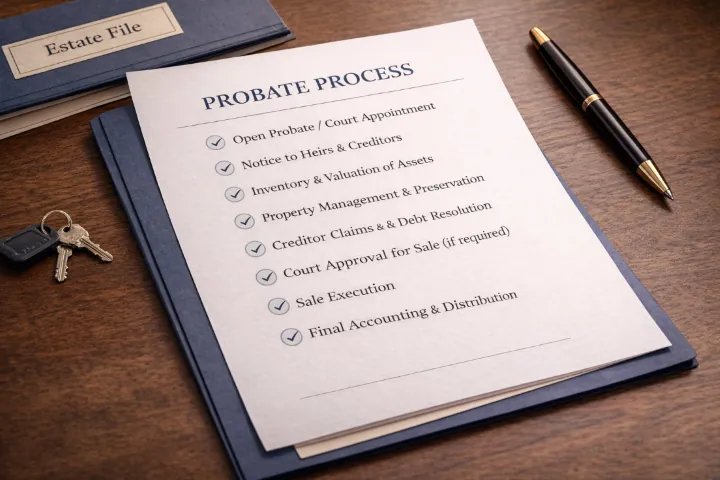
Before listing the property or signing a sale contract, confirm who has authority to act and obtain the documents required by the estate attorney and title company. The personal representative’s authority may be shown through court-issued Letters of Personal Representative and may be affected by the will or a court order.
Under Arizona law, a personal representative acting reasonably for the benefit of interested persons may sell estate real property unless the will or an order in a formal proceeding restricts that authority. A court-confirmation hearing is therefore not a routine requirement for every Arizona probate property sale. The estate attorney should determine the authority and procedure that apply to the specific estate.
Probate, Trust, and Inherited Property Are Different
A property connected to a death is not automatically a probate property. It may be held in a trust, owned with survivorship rights, subject to a beneficiary deed, or transferred through another lawful procedure. The ownership structure comes first.
The ownership structure determines who has authority, which documents the title company requires, whether a court proceeding is involved, who must sign the listing and sale documents, and how proceeds can be distributed.
TFI’s broader Selling an Inherited Property Guide addresses inherited homes that may or may not involve probate. This page focuses on real estate being administered through an Arizona estate process.
Selling a House Through an Arizona Probate Estate
Once authority is confirmed, the sale resembles a conventional transaction in many respects. The estate may still require additional coordination around decision-makers, documentation, property access, maintenance, title, and distribution of proceeds.
A practical process typically includes:
- Confirming authority and the professionals involved
- Reviewing title, liens, occupancy, insurance, HOA, and property condition
- Establishing market value and comparing sale strategies
- Completing necessary cleanout, repairs, safety work, or as-is preparation
- Marketing the property and qualifying buyers
- Comparing offers based on net proceeds and transaction certainty
- Coordinating inspections, appraisal, title, escrow, and closing
- Providing closing records to the personal representative and estate professionals
Valuation and Pricing in a Probate Sale
The personal representative has a duty to act reasonably for the benefit of the estate and interested persons. A well-supported pricing recommendation documents that the property was evaluated using market evidence rather than convenience or pressure from one interested party.
TFI reviews comparable sales, active and failed competition, property condition, deferred maintenance, location, layout, improvements, cleanout and repair costs, buyer demand, likely financing limits, and the tradeoff between preparation, timing, price, and certainty.
A broker Comparative Market Analysis can support the sale strategy, but it is not a formal appraisal. The estate attorney, court, lender, tax professional, or other stakeholder may require a qualified appraisal for a separate purpose.
Property Condition, Cleanout, and Sale Preparation
Estate properties often contain personal belongings, deferred maintenance, outdated systems, safety concerns, or incomplete records. The appropriate preparation strategy depends on estate liquidity, property condition, timing, buyer demand, and the expected return from the work.
Options may include:
- Securing and maintaining the property
- Documenting condition before belongings or fixtures are removed
- Completing an estate cleanout
- Addressing safety and insurability issues
- Making selective repairs or cosmetic improvements
- Selling in current condition with appropriate disclosures
- Requesting a direct cash offer as one comparison point
TFI can help compare the likely market effect of different preparation levels. The estate may also review TFI’s Traditional Seller-Representation Process and Cash-Offer Request Option.
What Happens to the House During Probate
A probate property may be vacant, occupied by an heir, leased to a tenant, or occupied without a formal agreement. The personal representative should work with the estate attorney to understand rights, notices, access, and responsibilities before changing occupancy or entering the property.
Occupancy affects insurance, utilities, maintenance, showings, personal-property removal, lease obligations, buyer interest, closing timing, and possession. Resolve those practical issues early enough to support a realistic marketing and closing plan.
Tenant-Occupied or Heir-Occupied Estate Property
A tenant’s lease and applicable landlord-tenant requirements do not disappear because the owner died. An heir or other family member living in the home may present different legal and practical issues.
TFI can evaluate how occupancy affects marketability, buyer type, showing access, price, and transaction timing. The estate attorney should direct notices, possession issues, lease interpretation, and any dispute among occupants or beneficiaries.
Liens, Title Issues, and Documentation
Title review may identify mortgages, tax liens, judgments, HOA balances, solar obligations, code issues, ownership questions, or recorded documents that must be addressed before closing.
Early coordination with the title company and estate attorney should confirm the authorized signer, required estate or court documents, payoff obligations, ownership interests, deed or legal-description issues, and records needed from out-of-state or deceased parties.
Resolving those matters early reduces the risk of accepting an offer that cannot close on the proposed timeline.
Out-of-State Personal Representatives and Heirs
Many Arizona estate properties are administered by a personal representative or heirs who live elsewhere. TFI can support remote decision-making through video reviews, electronic documentation, vendor access, property updates, virtual meetings, and coordination with local title and service providers.
The estate attorney should determine whether an out-of-state appointment, ancillary proceeding, local agent, or other legal step is required. TFI focuses on the property and transaction work once the appropriate authority is established.
Comparing Traditional Marketing, As-Is Sales, and Cash Offers
A probate property does not automatically need to be sold at a discount. The appropriate method depends on condition, timing, estate liquidity, buyer demand, access, and the personal representative’s objectives—not on the probate label itself.
A broad market listing can support price discovery. An as-is listing can preserve that exposure without committing the estate to major renovations. Selective preparation may improve marketability, while a direct cash offer can be useful when speed, condition, access, or certainty matters more than full exposure.
TFI helps the estate compare likely net proceeds, preparation costs, time, buyer risk, and closing certainty across those alternatives.
Fiduciary Judgment and Transaction Documentation
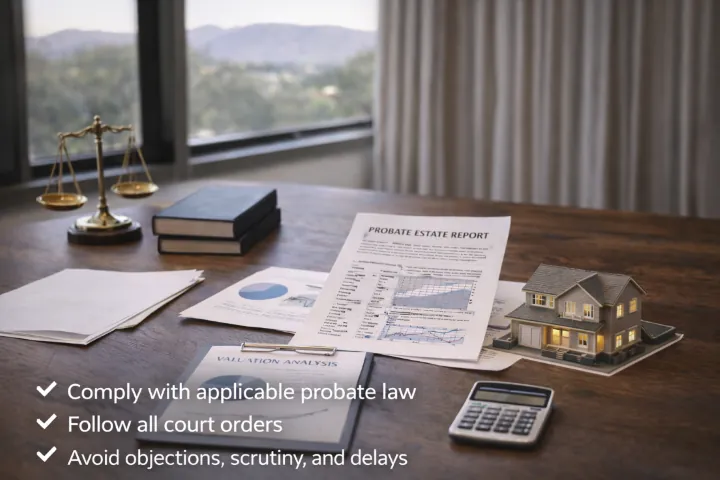
A personal representative’s decisions may later be reviewed by beneficiaries, creditors, attorneys, tax professionals, or the court. Clear market support and transaction records explain why a particular pricing, preparation, buyer, or contract decision was selected.
Useful records may include the CMA, condition information, repair or cleanout estimates, marketing activity, buyer feedback, offer comparisons, proof of funds or financing information, contract changes, and written approvals. The documentation should fit the estate and transaction rather than create paperwork without a purpose.
Common Probate Real Estate Mistakes to Avoid
Common mistakes include:
- Marketing or contracting to sell before authority is confirmed
- Assuming every inherited property is in probate
- Importing probate procedures from another state into an Arizona estate
- Allowing insurance, utilities, maintenance, pool service, or security to lapse
- Removing property or making repairs without appropriate authorization and records
- Accepting a convenient offer without comparing market exposure, net proceeds, and closing risk
- Ignoring occupancy, lease, lien, title, HOA, solar, or code issues until escrow
- Relying on a real estate professional for legal or tax conclusions
A coordinated process lets the personal representative, attorney, title company, tax professionals, and real estate broker handle the parts of the assignment within their respective roles.
Frequently Asked Questions About Arizona Probate Real Estate
Can a personal representative sell Arizona estate real property without a court-confirmation hearing?
Often, yes. Arizona law generally authorizes a duly appointed personal representative to sell estate real property unless the will or a court order restricts the authority. The estate attorney should confirm the authority and required procedure for the particular case.
Can an heir list the property before a personal representative is appointed?
An heir should not assume that inheritance alone provides authority to list or contract to sell estate property. The estate attorney and title company should confirm ownership and signing authority before the property is marketed.
Does a probate property have to be appraised before it is sold?
A formal appraisal may be required for estate, tax, accounting, court, or other purposes, but that question should be answered by the estate’s legal and tax professionals. TFI can prepare a broker Comparative Market Analysis for real estate pricing and marketing strategy; a CMA is not an appraisal.
Can a probate house be sold as-is?
Yes, an as-is strategy may be appropriate when the estate wants to limit repair spending or the property’s condition supports that approach. The personal representative should still evaluate market exposure, disclosures, buyer qualifications, net proceeds, and transaction risk.
What if several heirs disagree about selling the property?
The personal representative’s authority, the will, estate obligations, and applicable law control the process. The estate attorney should address beneficiary rights and disputes. TFI can provide market information and sale alternatives for the authorized decision-maker and advisors to consider.
Can TFI help if the personal representative lives outside Arizona?
Yes. TFI can coordinate property access, condition reviews, vendors, valuation, listing preparation, marketing, offers, inspections, title, and closing for authorized representatives who live elsewhere.
What areas does TFI serve for probate real estate?
TFI’s residential probate real estate work is centered on the Greater Phoenix Area and Arizona, including Phoenix, Scottsdale, Tempe, Mesa, Chandler, Gilbert, Glendale, Peoria, Surprise, Goodyear, Buckeye, Queen Creek, and surrounding communities.
Important Legal and Tax Note
This page provides general real estate education and does not constitute legal, tax, accounting, or appraisal advice. Probate authority, court procedure, beneficiary rights, creditor issues, tax treatment, and required estate documents should be addressed by qualified Arizona legal and tax professionals. TFI provides broker-led real estate valuation, preparation, marketing, negotiation, and transaction coordination within the scope of the real estate engagement.