


Greater Phoenix Area Home Seller Representation Starts Before the Listing
Selling a home in Phoenix effectively requires more than MLS entry and a sign in the yard. Start with a defensible understanding of value, the home's condition, competing listings, current buyer behavior, timing, expected selling costs, and your actual priorities.
TFI Real Estate Advisors represents residential sellers throughout the Greater Phoenix Area. You work directly with Ian Johnson, a licensed Arizona Real Estate Associate Broker and real estate professional since 2010. The engagement covers preparation, pricing, positioning, qualified market exposure, offer analysis, negotiation, inspection and appraisal risk, financing, and closing execution.
TFI serves home sellers throughout the Greater Phoenix Area, including Phoenix, Scottsdale, Tempe, Mesa, Chandler, Gilbert, Glendale, Peoria, Surprise, Goodyear, Avondale, Buckeye, Queen Creek, and surrounding communities, subject to the property and scope of the engagement.
Homeowners who are still evaluating the decision can begin with a Home-Value Review. Sellers prioritizing speed or certainty can compare the traditional listing process with a Cash-Offer Review. Owners whose prior listing expired or was withdrawn can review the Homes-That-Did-Not-Sell Strategy.
What a Phoenix Listing Broker Should Do
A listing broker's role extends far beyond advertising the property. Effective seller representation should include:
- Defining the seller's goals, timing, constraints, and acceptable trade-offs
- Evaluating recent sales, active competition, pending activity, and buyer demand
- Developing a pricing range and launch strategy that can withstand market scrutiny
- Identifying preparation, repair, presentation, and disclosure priorities
- Coordinating professional property media and clear listing information
- Creating exposure through the MLS, brokerage networks, consumer platforms, and targeted outreach appropriate to the property
- Monitoring showings, questions, online activity, competing listings, and market feedback
- Comparing offers based on price, financing, contingencies, timing, concessions, and execution risk
- Managing inspection, appraisal, title, financing, and closing issues as they develop
You should understand not only what the broker plans to do, but why each step matters and how the strategy will change if the market responds differently than expected.
What Happens in a Phoenix Home Seller Consultation
An initial seller consultation should create clarity, not pressure to list. The review typically addresses:
- The property, ownership situation, and desired timeline
- Current condition and preparation priorities
- Recent comparable sales and active competing inventory
- A preliminary value and pricing framework
- Likely buyer profile and marketability concerns
- Traditional listing, cash-offer, or hold alternatives when relevant
- Expected transaction stages, risks, and selling-cost considerations
The appropriate recommendation may be to list now, complete targeted preparation first, wait for a better ownership window, or compare a conventional sale with another option. The property and your objectives should determine the path—not a predetermined sales script.
Understanding Your Position as a Seller
Your constraints, motivations, flexibility, timing, financial goals, and risk tolerance all affect which strategies are realistic in the current market.
Clarifying those factors early helps you choose the timing, set realistic expectations, establish pricing boundaries, and avoid decisions driven by pressure or incomplete information.
Preparation Creates Leverage
Preparation is one of the most overlooked parts of a successful sale. When you understand current market conditions, address the most important property and presentation issues, establish pricing boundaries, and anticipate buyer questions, the home enters the market from a stronger position.
Preparation does not mean completing every possible improvement. It means deciding which work is likely to improve marketability or reduce buyer objections—and which work is unlikely to justify its cost.
Pricing Is the Most Important Decision a Seller Makes
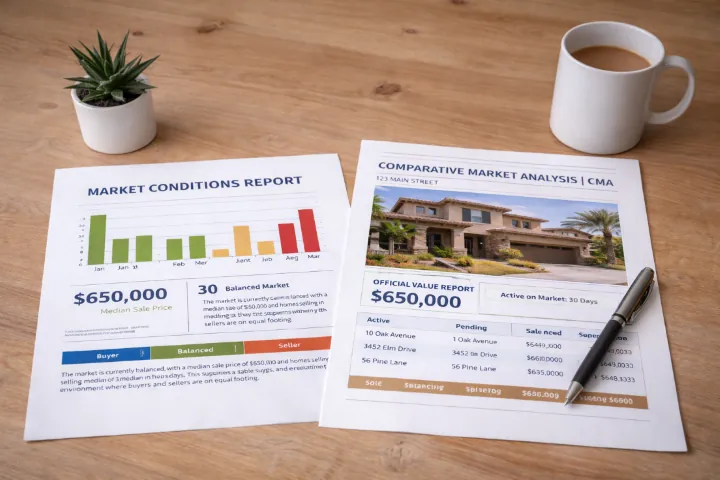
Price shapes how buyers perceive the home. It influences interest, showing activity, and negotiating leverage more than any other factor.
A well-priced home attracts attention and creates momentum. An overpriced home often struggles for interest, accumulates market time, and can ultimately sell for less than it might have under a stronger initial strategy.
Because the market reacts most strongly when a home is first introduced, pricing decisions made early carry outsized impact.

How to Price a Home to Sell
Pricing a home to sell is not about finding the highest possible number—it is about positioning the home correctly within the market. Buyers compare options quickly, and price is often the first filter they apply.
Effective pricing considers:
- Current market conditions
- Comparable recent sales
- Competing active listings
- Buyer behavior at different price points
Homes priced accurately tend to attract stronger interest early, while homes priced optimistically often struggle to regain momentum.
How the Market Interprets Price
Buyers do not evaluate price in isolation. They compare a home against available alternatives and recent sales within the same price range.
If a home is priced above where buyers perceive value, activity slows quickly. As time passes, buyer perception shifts, and price reductions become less effective than pricing correctly from the start.
Understanding how buyers interpret price helps sellers avoid common miscalculations.
Why Homes Don’t Sell (Even in Strong Markets)
When a home fails to sell, the cause is rarely one issue. Even in a favorable market, pricing above perceived value, weak positioning against competing listings, presentation problems, or a failure to respond to early feedback can stall activity.
Treat the market response as evidence. Understanding what buyers rejected—and why—allows you to correct the strategy before market time and repeated reductions weaken the property’s position.
Selling in Competitive vs. Balanced Markets
Seller strategy must adapt to market conditions. In competitive markets, strong demand may allow for firmer pricing and limited concessions. In more balanced markets, flexibility on price or terms often becomes more important.
Recognizing the environment you are operating in helps you adjust the strategy instead of applying the same approach in every market.
Positioning a Home to Attract the Right Buyers
Positioning determines how buyers interpret the home once it enters the market. Price, condition, presentation, timing, photographs, listing information, and showing access should tell a coherent story about the property and its value.
Strong positioning does not try to appeal equally to everyone. It helps the buyers most likely to value the property understand why it compares favorably with the alternatives available at the same price.
Showings, Buyer Activity, and Market Feedback
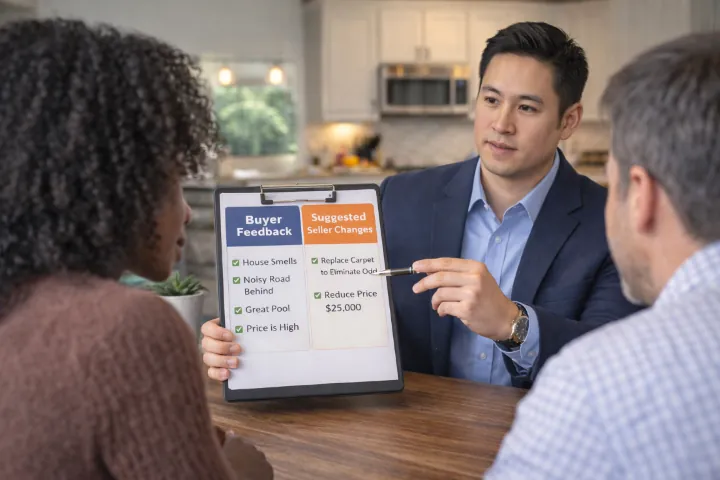
Early buyer activity provides critical feedback. Showing volume, buyer questions, and offer patterns signal how the market is responding to price and positioning.
When you monitor this feedback objectively, you can make informed adjustments. Ignoring or dismissing early signals often leads to prolonged market time and reduced leverage.
Feedback is most valuable early, when strategic changes are most effective.
How Long It Can Take to Sell a Home in Phoenix
Time on market varies based on price, condition, market conditions, and buyer demand. Homes that are priced and positioned correctly tend to attract attention quickly, while homes that miss the mark often experience longer market time.
Understanding realistic timelines helps sellers set expectations and evaluate feedback without unnecessary stress.
Negotiation Is About Leverage, Not Emotion
Negotiation outcomes are shaped by leverage. Buyer interest, competing offers, market conditions, timing, financing strength, and flexibility on non-price terms all affect the seller’s position.
Establishing priorities and decision boundaries before an offer arrives helps you evaluate the complete package without allowing urgency or emotion to control the response.
Managing Risk During the Selling Process
Every sale involves financing, inspection, appraisal, title, and timing risk. Those risks are easier to manage when the seller understands the contingencies, considers likely inspection and appraisal scenarios in advance, and sets decision thresholds before negotiations become urgent.
The aim is to preserve options and keep avoidable surprises from dictating the transaction.
Inspections, Appraisals, Financing, and Transaction Friction
Most home sales involve buyer due diligence and, when financing is used, lender verification. Inspections can produce repair requests or credits. Appraisals can affect loan approval. Financing, title, insurance, and contingency deadlines can create uncertainty even after an offer is accepted.
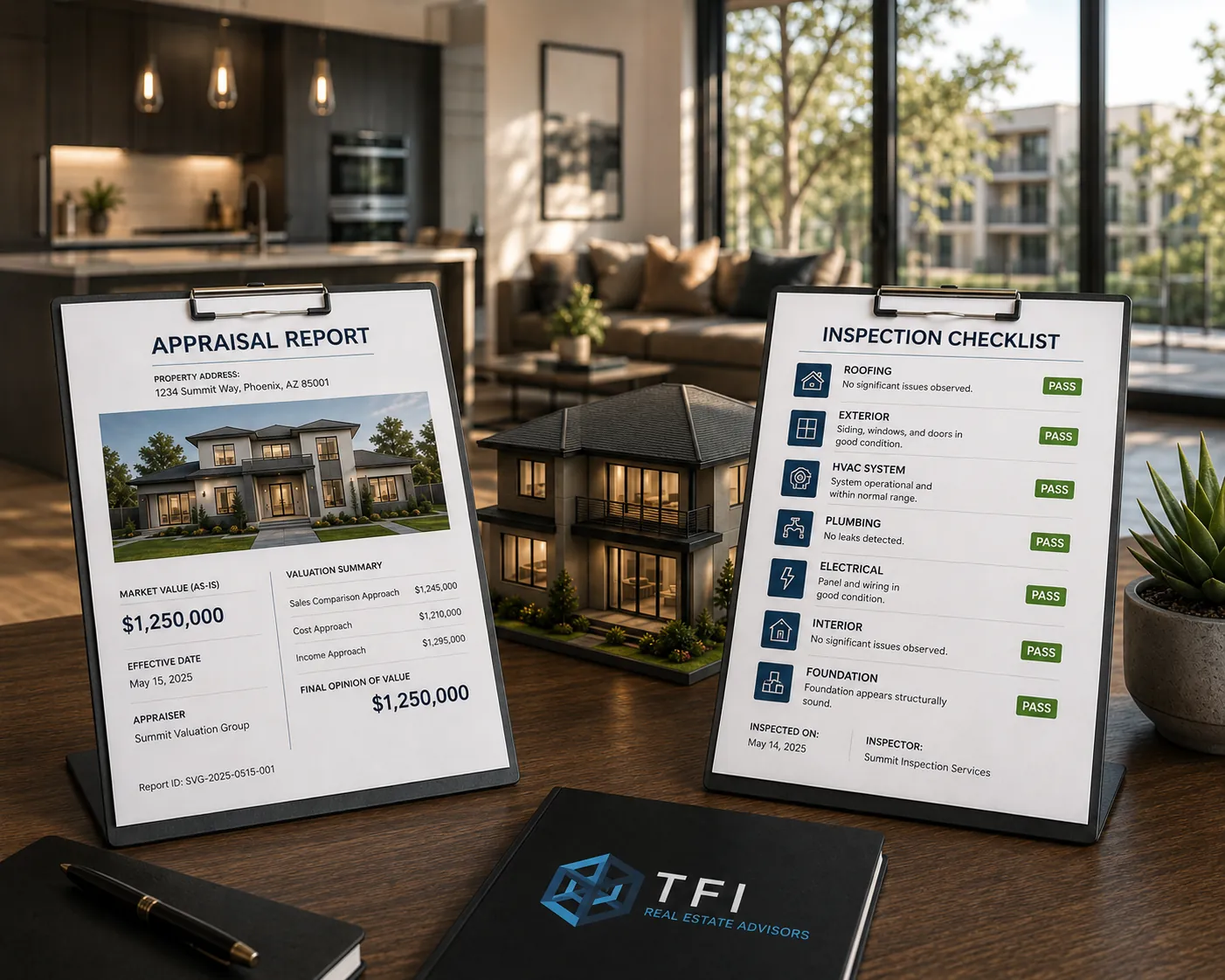
Your position is stronger when likely issues have been anticipated, contract deadlines are monitored, and requests are evaluated against the strength of the buyer, the available alternatives, and the cost of returning to market. Preparation does not eliminate transaction risk, but it reduces surprise and supports more deliberate negotiation.
Traditional Listing, Cash Offer, or Hold Strategy
Not every seller situation fits the same transaction path. A traditional listing generally seeks the broadest market exposure and competitive buyer response. A direct cash offer typically prioritizes speed, certainty, and reduced preparation in exchange for a different pricing structure. Continuing to hold or rent the property may also remain an option when timing, financing, or tax considerations make an immediate sale less attractive.
The relevant comparison is not simply the highest headline number. Sellers should evaluate likely net proceeds, preparation costs, carrying costs, contingencies, closing probability, timing, convenience, and the consequences of each path.
Homeowners considering a direct sale can use TFI's Cash-Offer Review to compare that option with a conventional listing. A Home-Value Review can help establish the market context needed for a meaningful comparison.
Setting Realistic Expectations as a Seller
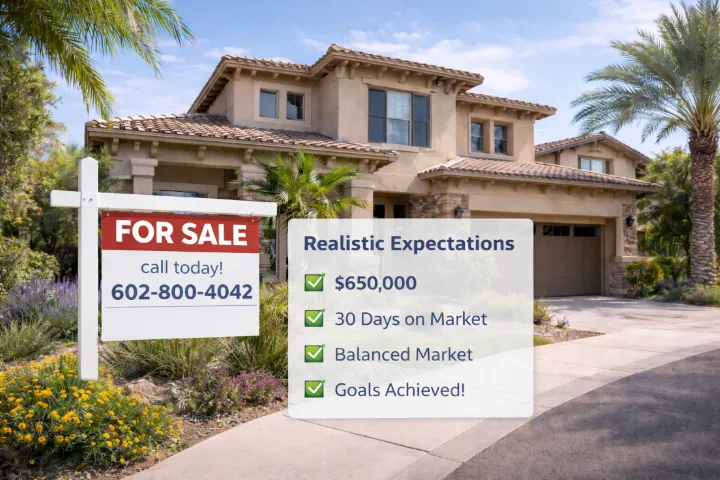
Expectations affect satisfaction as much as the final result. When you understand current competition, buyer behavior, likely transaction timing, and the limits of what the market will support, you can respond to feedback while keeping decisions aligned with your actual goals.
Common Seller Mistakes That Reduce Final Sale Price
Many sellers unintentionally undermine outcomes through avoidable decisions. Common mistakes include:
- Chasing the highest estimated value rather than market value
- Delaying necessary preparation
- Dismissing early buyer feedback
- Reacting emotionally during negotiations
Avoiding these mistakes often has a greater impact on results than any single tactic.
Frequently Asked Questions About Selling a Home in Phoenix
How do I sell my home in Phoenix?
Start by defining the desired timing and outcome, then evaluate the home's likely value, condition, active competition, and preparation needs. A listing strategy should be established before the property is exposed to the market, followed by professional presentation, broad and targeted marketing, offer analysis, negotiation, due diligence, and closing coordination.
How should I choose a Phoenix listing agent or broker?
Evaluate local market knowledge, responsiveness, pricing discipline, marketing plan, negotiation approach, transaction management, and whether the person advising you will remain directly involved. Unsupported promises of the highest price are less useful than a clear process and an explanation of how the strategy will adapt to market feedback.
How is the asking price established?
Pricing should consider recent comparable sales, active and pending competition, property condition, location, buyer search behavior, market velocity, and the likely reaction at different price points. The appropriate asking price is a positioning decision, not simply an estimate of theoretical value.
Should I make repairs before selling?
Not automatically. Some repairs or presentation improvements can reduce buyer friction or improve marketability, while others may not return their cost. The decision should be based on the property, likely buyer pool, available time, and how the home compares with competing inventory.
What if my Phoenix home was listed but did not sell?
The prior pricing, presentation, exposure, showing feedback, competition, and timing should be diagnosed before relaunching. TFI's Homes-That-Did-Not-Sell Guide addresses the repositioning and relaunch process.
Can I compare a traditional listing with a cash offer?
Yes. The comparison should account for likely net proceeds, repairs, commissions or fees, carrying costs, contingencies, closing certainty, and timing. Review the Cash-Offer Request Page for the trade-offs between the two approaches.
Does TFI represent sellers outside the City of Phoenix?
Yes. TFI's residential focus includes the Greater Phoenix Area and surrounding Arizona communities, subject to the property, location, and scope of the engagement.
Why Experienced Guidance Matters When Selling
Selling a home requires sequencing, judgment, and risk management. Experienced guidance helps you navigate pricing, positioning, negotiation, and uncertainty with clarity.
A structured approach keeps each decision connected to your goals instead of treating every development as a separate crisis.