


What Real Estate Wire Fraud Is
Real estate wire fraud often begins when a criminal gains access to—or convincingly imitates—the email account of an agent, title company, lender, attorney, buyer, seller, or another participant. The criminal then sends false payment instructions that appear to belong to the real transaction.
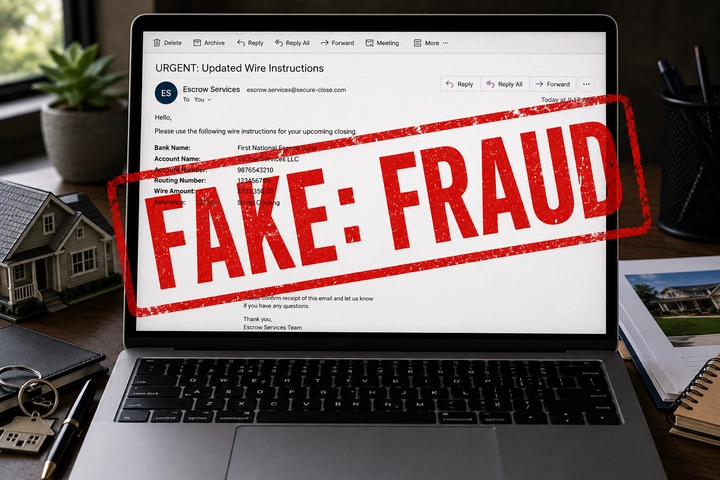
The message can look authentic because it uses names, property details, signatures, timing, and transaction language taken from prior emails or public information. The objective is to make a fraudulent instruction feel like an ordinary closing update.
Why Real Estate Transactions Are Targeted
Closings involve large, time-sensitive transfers and multiple professionals communicating across email, phone, portals, and electronic-signature platforms. Buyers may be sending down-payment and closing funds; sellers may be receiving proceeds; and the parties are often focused on deadlines, moving, inspections, financing, and document execution.
That combination creates an opportunity for urgency and confusion. A fraudulent message may arrive late in the day, shortly before closing, or immediately after a legitimate conversation so the recipient feels pressure to act without independently verifying the change.
How a Wire Fraud Attempt Develops
The criminal may monitor a compromised account, learn the transaction timeline, create a nearly identical email address, and send instructions directing funds to a different bank. Other attempts use text messages, phone calls, fake portals, altered payoff statements, or requests to send funds in several smaller transfers.
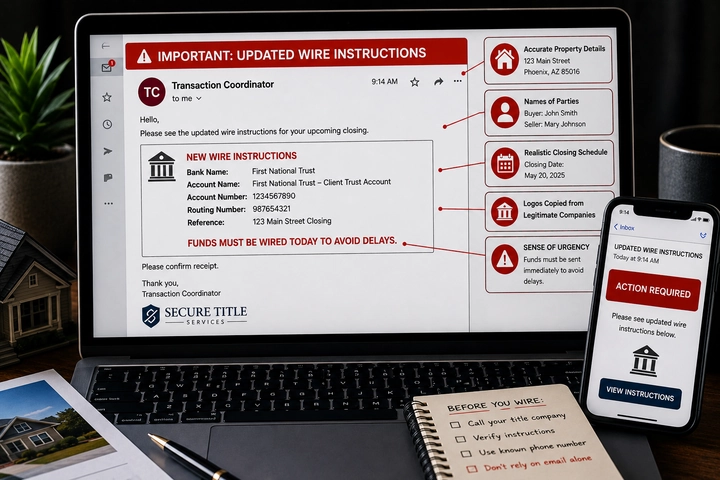
Changed account numbers, secrecy, unusual urgency, grammar or formatting differences, unexpected attachments, and instructions that bypass the established title or lender process are warning signs. A polished email is not proof that the sender is legitimate.
Establish a Verification Protocol Early
The safest process is agreed upon before the closing becomes urgent.
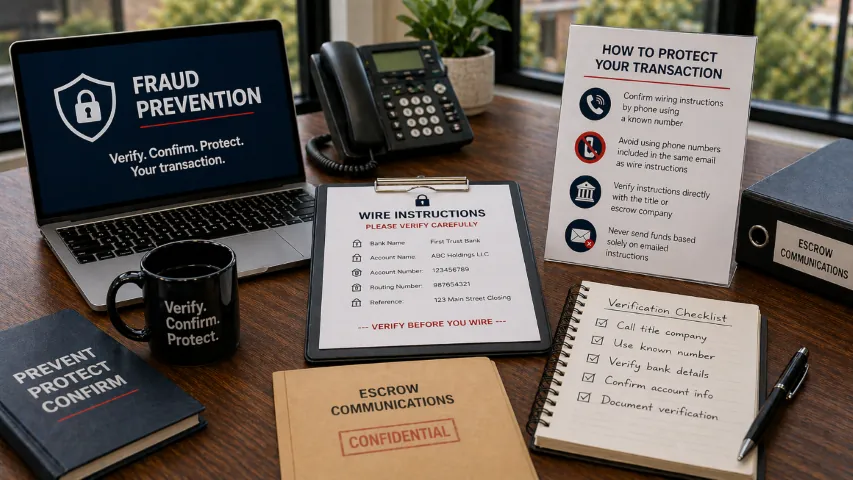
- Identify the legitimate source of instructions. Confirm whether the title company, escrow officer, lender, or another party will provide them and through what channel.
- Save trusted phone numbers independently. Use the number obtained from an earlier verified conversation, the official company website, or in-person documents—not a number contained in the message being verified.
- Call before sending funds. Read back the receiving bank name, account and routing information, beneficiary, amount, and purpose.
- Treat any change as a new risk event. Do not act on revised wiring instructions until the change has been confirmed through the trusted number and, where appropriate, by more than one known participant.
- Confirm receipt promptly. After initiating the transfer, contact the legitimate recipient to verify that the funds arrived in the correct account.
The Roles of the Transaction Participants
Title and escrow companies generally provide official wiring instructions and maintain closing controls. Lenders manage loan-related funds and payoff procedures. Real estate brokers reinforce the verification process, keep communication organized, and help clients identify an unexpected deviation from the transaction plan.
No participant can guarantee that every account, device, or message is secure. The protection comes from layered controls: secure systems, identity verification, independent phone confirmation, limited sharing of sensitive information, and prompt escalation when something does not match.
If Funds Have Been Sent to the Wrong Account
Time is critical. The sender should immediately contact the bank or wire-transfer service and ask for a recall or fraud hold, notify the legitimate title or escrow company and real estate professionals, and report the incident to law enforcement and the FBI's Internet Crime Complaint Center. The affected parties may also need legal, insurance, cybersecurity, and identity-theft assistance.
Do not wait for an email response from the suspected sender. Use independently verified phone numbers and preserve emails, texts, bank records, call logs, account information, and screenshots. Recovery is not guaranteed, but rapid action gives financial institutions and investigators the best opportunity to intervene.
Protecting Seller Proceeds
Sellers face a related risk when criminals attempt to change the account receiving sale proceeds. A seller should establish disbursement instructions directly with escrow, confirm how changes are handled, and be wary of any message asking for a new account or last-minute transfer method.
Use the same rule for every request involving money: confirm it through a trusted contact method that you obtained independently.
Frequently Asked Questions
Will a title company email wiring instructions?
Practices vary. Some use secure portals, encrypted messages, in-person delivery, or other controls. Regardless of the delivery method, verify the instructions by calling the title or escrow company at a previously confirmed number before sending funds.
Is it safe to rely on a reply within the same email thread?
No. A compromised account can allow a criminal to read and reply within a legitimate thread. Verification must occur through an independent channel.
Can stolen wire funds be recovered?
Sometimes, particularly when the bank and authorities are notified immediately, but recovery is not assured. The receiving account may be emptied or the money transferred rapidly.
Do title companies prevent all wire fraud?
No organization can guarantee prevention. Title and escrow controls are important, but buyers and sellers must also verify instructions and report changes or suspicious communications immediately.
Should sellers verify where proceeds will be sent?
Yes. Sellers should confirm disbursement instructions directly with escrow and independently verify any requested change before closing.
Advisory Note
This guide provides general real estate and transaction-safety education. Anyone who believes funds were misdirected should immediately contact the relevant financial institutions, title or escrow company, law enforcement, the FBI's Internet Crime Complaint Center, and qualified legal or cybersecurity professionals.