


How TFI Works With Real Estate Investors
A listing or investment narrative is only a starting point. We begin with your objectives, available capital, time horizon, desired level of involvement, existing holdings, liquidity needs, and tolerance for property, financing, and execution risk.
From there, the assignment may involve direct real estate strategy, acquisition or disposition representation, underwriting, valuation and pricing context, financing and capital-structure analysis, 1031 replacement-property strategy, or coordination around a private partnership. The Greater Phoenix Area and Arizona are TFI’s core real estate markets, with selective national reach for larger commercial, multifamily, institutional, investment, and capital-driven assignments where the scope and resources support the engagement.
TFI Real Estate Advisors and Tesseract Financial Investments
TFI Real Estate Advisors and Tesseract Financial Investments are related, but they do different work. That distinction tells you whether the conversation concerns brokerage and advisory services, a property-level decision, or a potential private investment relationship.
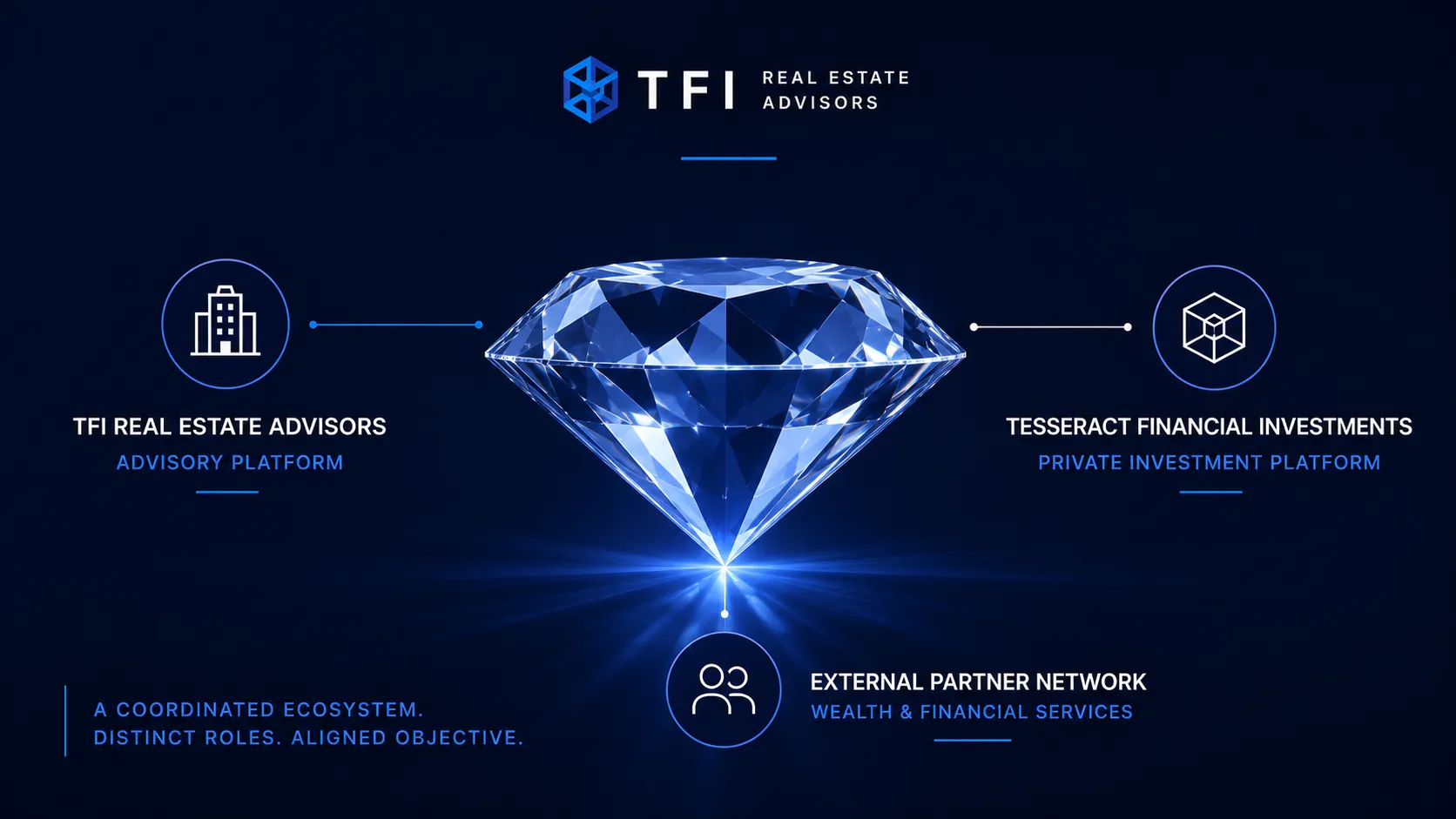
TFI Real Estate Advisors provides broker-led real estate services. These may include acquisitions, dispositions, leasing, development advisory, valuation and pricing strategy, underwriting support, capital planning, and coordination of transaction diligence and execution.
Tesseract Financial Investments is the related private investment entity through which TFI-sponsored funds, joint ventures, syndications, or other structures may be formed when a suitable opportunity, operating plan, investor fit, and compliant offering process exist. Any investment opportunity is governed by its formal documents, eligibility standards, risks, and applicable securities requirements. This website is not an offer to sell or a solicitation to purchase a security.
Broader wealth management and securities advisory services are provided separately through Desert Rose Capital Management, a registered investment-advisory firm operated by TFI’s business partner. When useful, the real estate analysis can be coordinated with an investor’s financial, tax, legal, lending, and estate-planning professionals.
Ways Investors Engage With TFI
Most investor conversations begin with a practical need. You may be deciding what to hold, improve, refinance, recapitalize, exchange, or sell; defining acquisition criteria and reviewing opportunities; evaluating a joint venture or repeat capital relationship; or asking how a TFI-sponsored opportunity would be considered if an appropriate offering becomes available.
We define the scope before advancing a product or transaction. That keeps the real estate objective, professional roles, compensation, decision authority, and expected deliverables clear from the outset.
Investment Philosophy
TFI’s investment philosophy starts with discipline, not deal volume. Performance depends on purchase basis, income durability, property condition, tenant and lease risk, operating complexity, capital requirements, financing, market liquidity, and the quality of execution over time.
Underwriting should distinguish verified information from assumptions, identify the variables that most affect performance, and test the business plan under less favorable conditions. Attractive projected returns do not compensate for weak structure, insufficient reserves, unrealistic exit assumptions, or a property that does not fit the investor’s objectives.
Selectivity is part of risk management. An opportunity should advance because the property, capital structure, ownership plan, and investor fit work together—not simply because capital is available or a transaction can be completed.
How Advisory, Capital, and Execution Intersect
Market judgment, underwriting, capital structure, and execution cannot be evaluated in isolation. Unsuitable debt can weaken a sound acquisition. Concentration or illiquidity can make a strong property a poor portfolio fit. A tax-efficient exchange can leave the investor worse off when the replacement asset is inferior.
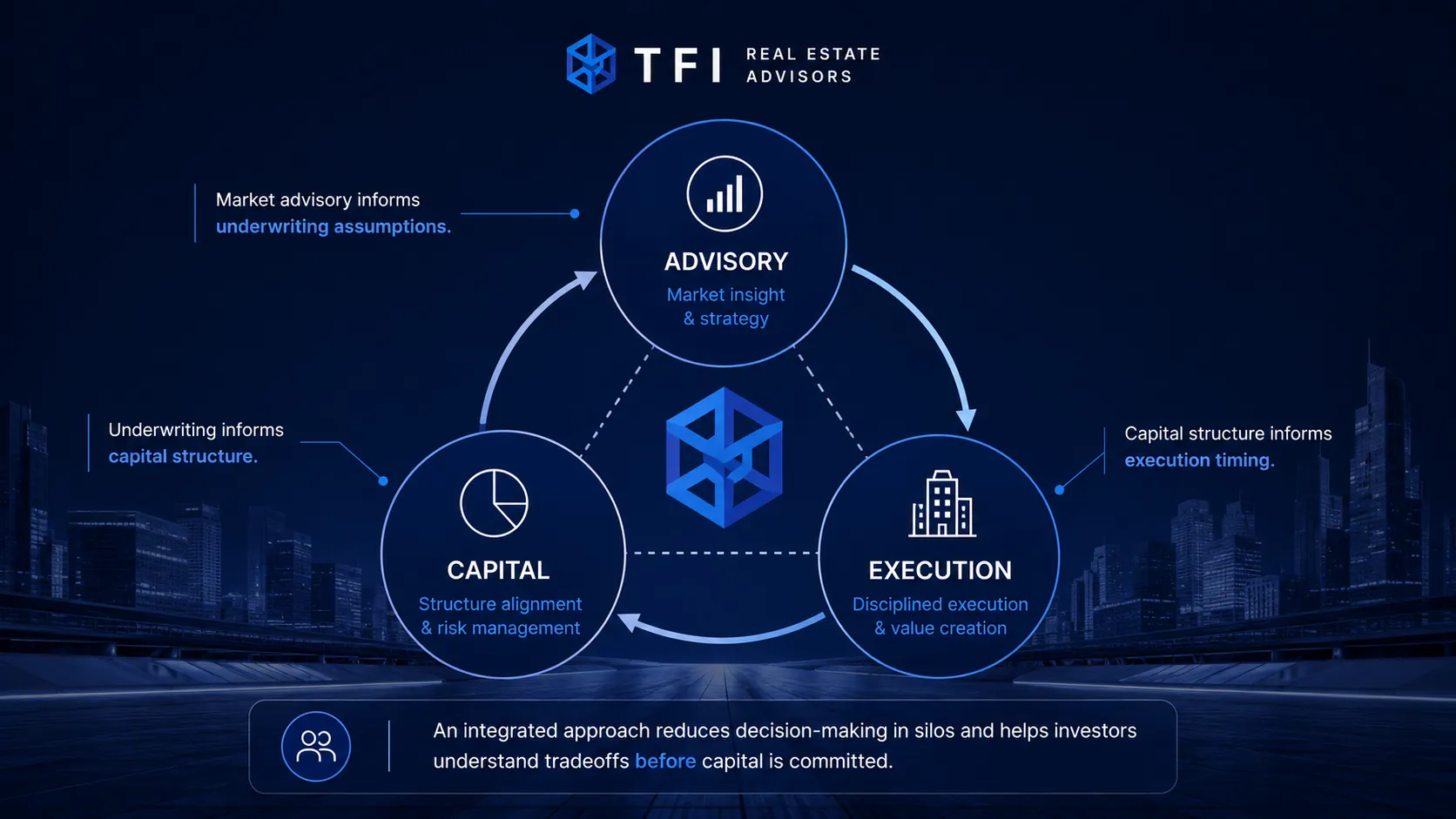
We connect those decisions. Market and property analysis inform underwriting; underwriting informs financing and ownership structure; capital structure affects flexibility, risk, and timing; and the resulting strategy guides negotiation, diligence, operations, and exit planning.
Direct Real Estate Strategy and Portfolio Advisory
Use Real Estate Investment Strategy &Amp; Portfolio Advisory when the question is how your direct property holdings fit together. The review may address acquisition criteria, concentration, leverage, liquidity, capital expenditures, maturity exposure, hold-versus-sell decisions, refinancing, recapitalization, and the role of real estate within your broader financial picture.
The work is focused on direct real estate and property-related decisions. Personalized securities allocation and investment management remain with the investor’s registered investment adviser or other qualified financial professional.
Deal Sourcing, Underwriting, and Transaction Execution
TFI’s Deal Sourcing &Amp; Underwriting work connects acquisition criteria to property-level analysis. It can include market screening, operating review, income and expense normalization, lease and tenant risk, capital needs, financing assumptions, downside scenarios, and exit sensitivity.
Once you decide to proceed, the appropriate brokerage pathway can carry the analysis into execution. TFI’s Commercial Buyer Representation, Multifamily Advisory, Wholesale and Discount Property Advisory, and Controlled Off-Market Advisory pages explain several of those paths.
Private Real Estate Investment Partnerships
The Private Real Estate Partnership Framework page addresses the relationship among the sponsor, operator, property business plan, governance, economics, reporting, and investor capital. Structures may include a property-level joint venture, syndication, fund, or other arrangement when the opportunity and formal offering process support it.
Private real estate investments are illiquid and can result in partial or total loss of capital. Investors should review the governing documents, conflicts, fees, leverage, business plan, sponsor contribution, decision rights, reporting, and exit provisions with their own legal, tax, financial, and investment professionals before committing capital.
Institutional and Family Office Capital
The Family Office &Amp; Private Capital Real Estate Relationships page is designed for family offices and private capital groups evaluating direct investments, co-investments, joint ventures, programmatic relationships, or potential TFI-sponsored structures when an appropriate opportunity and formal process exist.
These relationships require alignment around mandate, check size, property type, geography, leverage, governance, reporting, decision authority, deployment pace, and exit expectations. TFI contributes property-level judgment and direct broker access while coordinating with the capital partner’s existing investment, legal, tax, accounting, and operating resources.
1031 Exchange and Capital Repositioning Strategy
A 1031 exchange can preserve reinvestment capacity, but the deadlines can quickly turn tax planning into replacement-property pressure. TFI’s 1031 Exchange Strategy &Amp; Replacement Property Advisory page explains how to coordinate sale planning, replacement criteria, financing, identification strategy, property comparison, and transaction execution with a qualified intermediary and your tax and legal professionals.
The real estate objective remains primary. Tax deferral should support a stronger property or portfolio decision rather than become the reason to accept an inferior replacement asset.
Risk Management, Governance, and Transparency
Risk management continues throughout ownership. It requires conservative assumptions, appropriate reserves, visible conflicts, suitable leverage, reliable reporting, clear decision rights, realistic exit alternatives, and enough capacity to respond when the original plan changes.
TFI emphasizes direct communication and factual disclosure. Investors should understand what is known, what remains uncertain, who is responsible for each part of the work, and how decisions will be documented before capital is committed.
Who the TFI Investor Platform Serves
This investor platform is built for direct property owners, experienced individual investors, accredited and sophisticated investors, operating-business owners, family offices, private capital groups, and institutional or semi-institutional partners seeking disciplined real estate decisions and long-term alignment.
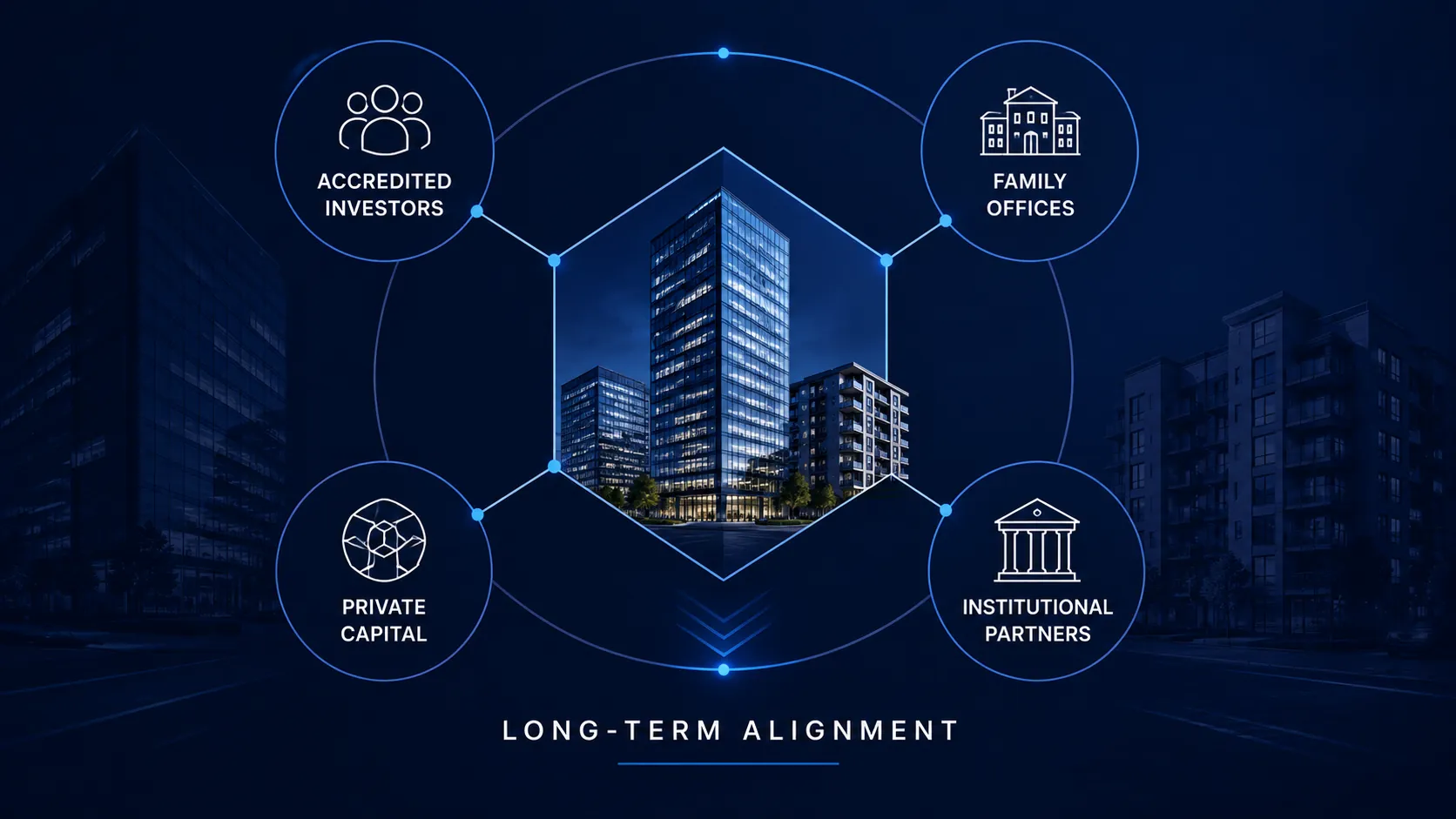
The engagement can be as focused as one property or as broad as a portfolio, acquisition mandate, 1031 exchange, partnership review, or initial evaluation of whether TFI’s model aligns with your objectives.
Investor Resources
- Real Estate Investment Strategy &Amp; Portfolio Advisory
- Deal Sourcing &Amp; Underwriting
- Private Real Estate Partnership Framework
- Family Office &Amp; Private Capital Real Estate Relationships
- 1031 Exchange Strategy &Amp; Replacement Property Advisory
- Investor Consultation Questionnaire
- Private Real Estate Investment Risks &Amp; Disclosures
- Wealth Management for Real Estate Investors
Frequently Asked Questions About Working With TFI as a Real Estate Investor
Does TFI advise investors who want to buy property directly?
Yes. TFI can help define acquisition criteria, evaluate markets and properties, underwrite opportunities, compare financing and risk, coordinate diligence, and provide buyer representation where the assignment fits TFI’s experience and market resources.
Does TFI currently offer a real estate fund or investment opportunity?
Tesseract Financial Investments is the private investment entity through which TFI-sponsored structures may be formed when an appropriate opportunity and compliant offering process exist. Availability should not be assumed from this website. Any offering would be made only through its formal documents to eligible investors.
What is the difference between TFI Real Estate Advisors and Tesseract Financial Investments?
TFI Real Estate Advisors provides real estate advisory and brokerage services. Tesseract Financial Investments is the related private investment entity used for appropriately structured TFI-sponsored investment relationships. The scope, duties, compensation, and governing documents depend on the specific engagement.
Can TFI review real estate I already own?
Yes. A review can address current value, income durability, property condition, debt, capital requirements, concentration, liquidity, hold-versus-sell alternatives, refinancing, recapitalization, or a possible 1031 exchange. The depth of the review depends on the available information and the decision being considered.
Does TFI provide securities or wealth-management advice?
TFI’s work in this section is centered on direct real estate, property transactions, underwriting, and TFI-sponsored relationships where applicable. Wealth management and personalized securities advice are provided separately through a registered advisory relationship, including Desert Rose Capital Management where appropriate.
Does TFI work with investors outside Arizona?
Yes, selectively. The Greater Phoenix Area and Arizona are the core real estate markets. Larger commercial, multifamily, institutional, portfolio, and capital-driven assignments may be considered nationally when the scope, property type, market coverage, and execution resources support responsible engagement.