


Start With the Decision, Not the Listings
Buying a home combines a property decision, a financing decision, and a lifestyle decision. Before you open the listings, define what the purchase needs to accomplish and which tradeoffs you are prepared to accept.
Clarify your likely ownership timeline, preferred locations, commute or access needs, housing type, condition tolerance, HOA preferences, and the financial flexibility you want to retain after closing. Those choices determine whether a property is genuinely suitable, even when it qualifies under the lender's guidelines.
Set a Comfortable Housing Budget
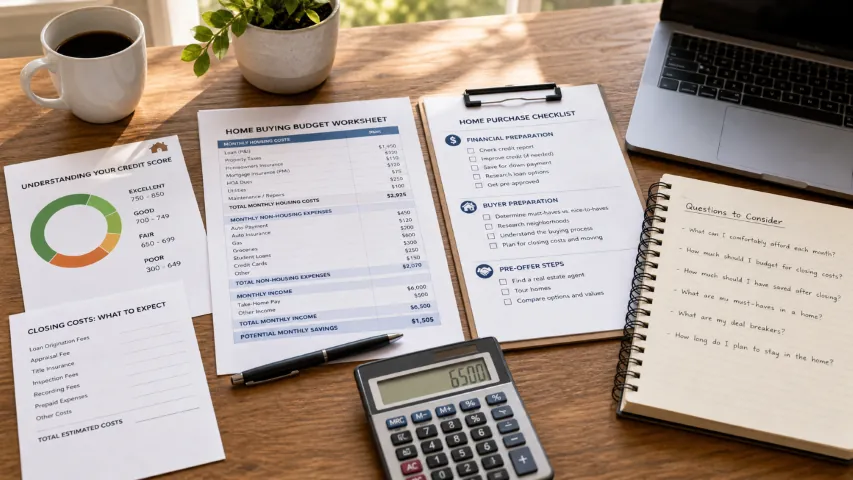
A lender’s approval amount is not a personal spending recommendation. Buyers should evaluate the complete housing cost, including principal and interest, property taxes, homeowners insurance, mortgage insurance where applicable, HOA charges, utilities, maintenance, transportation, and other recurring obligations.
The Consumer Financial Protection Bureau recommends evaluating the total monthly payment and property-related expenses rather than looking only at principal and interest. Its home-affordability guidance can help buyers organize that analysis.
Plan for Cash Needed Before and After Closing
The down payment is only one use of cash. Buyers may also need funds for inspections, appraisal, earnest money, closing costs, prepaid taxes and insurance, moving expenses, immediate repairs, furnishings, and post-closing reserves.
The strongest plan does not use every available dollar to reach the closing table. It preserves enough liquidity to absorb ordinary ownership surprises without immediately relying on high-cost debt.
Prepare Financing Early
An early lender conversation helps establish an initial price range, identify documentation needs, compare loan structures, and surface credit or income issues while there is still time to address them. A lender—not the real estate broker—issues a prequalification or preapproval and makes the final credit decision.
The dedicated Mortgage Preapproval Guide explains that process in greater detail.
Choose Representation Before the Search Becomes Urgent
A buyer’s representative helps translate objectives into search criteria, evaluate pricing and property risk, coordinate with lenders and inspectors, prepare offers, manage deadlines, and advise through negotiations. Involving the broker early is usually more useful than waiting until a specific home creates urgency.
Buyers should discuss the scope of services, agency relationship, duration, and compensation before beginning the active search. Buyers working with an MLS-participating real estate professional are generally asked to enter into a written buyer agreement before touring listed homes together. Compensation is negotiable, and an open house attended independently is treated differently. The National Association of REALTORS® provides a current consumer guide to written buyer agreements.
A written agreement should be read carefully. It should match the services and compensation the buyer and broker actually agreed upon.
Search by Tradeoffs, Not Just Features
A home search becomes more productive when buyers distinguish between requirements, strong preferences, and features that are merely attractive.
Location, property condition, lot characteristics, HOA structure, age of major systems, future maintenance, school or commute needs, and resale flexibility can matter more than finishes that are easy to change. In the Greater Phoenix Area, buyers may also need to compare older central neighborhoods, master-planned communities, new construction, retirement communities, condominium ownership, larger-lot properties, and lower-density outlying markets.
The Greater Phoenix Area Residential Overview and 37 City Guides can help narrow the geographic search before property-level analysis begins.
Make an Offer That Balances Price, Terms, and Risk
An offer is a complete package of economic and legal terms—not simply a purchase price.
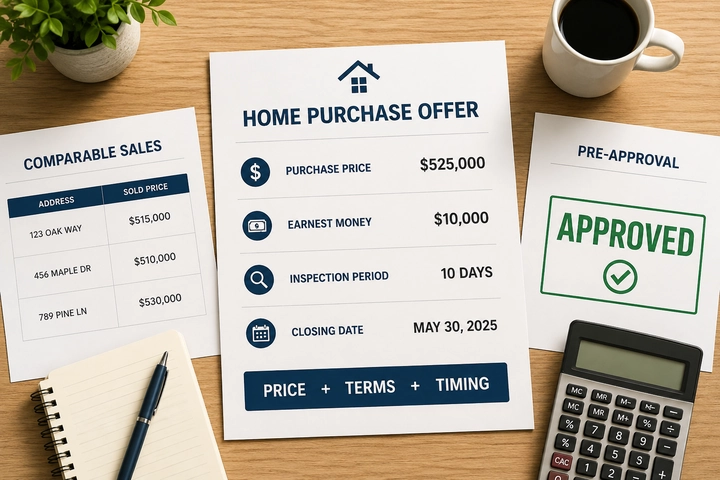
The package may address earnest money, financing, appraisal risk, inspection rights, requested seller concessions, closing date, possession, included property, and other contingencies or addenda. The relative importance of each term depends on the home, seller, financing, market conditions, and the buyer’s tolerance for risk.
Evaluate the Price in Context
Comparable sales, current competition, property condition, concessions, market direction, and the likely appraisal all matter. A list price is a marketing decision; it is not independent proof of value.
Buyers should understand the potential consequences of offering above supported value, including a possible appraisal shortfall or the need to contribute additional cash.
Understand What the Seller Values
Some sellers prioritize certainty, timing, possession, or a clean transaction as much as price. A stronger offer is not always the offer with the highest number. It is the offer that best aligns price and terms with the seller’s priorities while keeping the buyer’s risk controlled.
Keep Negotiation in Perspective
Negotiation is not about winning every point. It is about reaching an agreement you can perform and still consider acceptable after inspections, appraisal, and final loan review.
From Contract Acceptance Through Closing
After acceptance, several workstreams proceed at the same time. The contract controls the actual deadlines and rights, so buyers should track dates closely and ask questions before a deadline becomes urgent.
Escrow, Title, and Required Documents
The escrow and title process coordinates deposits, title review, documents, lender requirements, signing, funding, and ownership transfer. Buyers may also receive seller disclosures, HOA documents, title materials, insurance information, and property-specific reports.
The Arizona Department of Real Estate and Arizona REALTORS® publish a detailed Buyer Advisory that identifies documents, physical conditions, and surrounding-area issues buyers may need to investigate. It supplements professional inspections; it does not replace them.
Inspections and Property Due Diligence
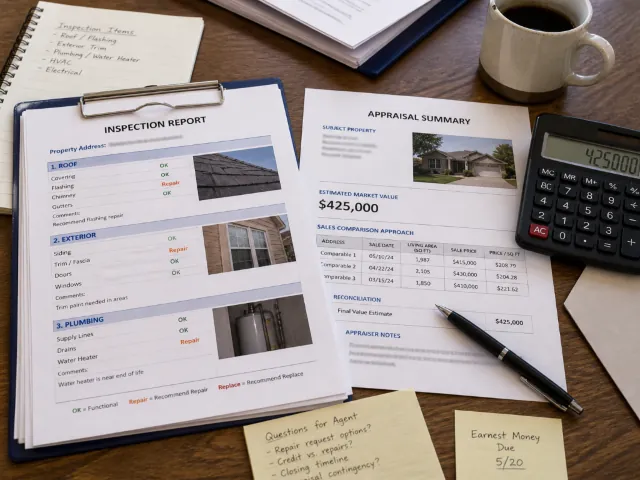
The inspection period is the buyer’s opportunity to investigate the physical property and other material concerns within the contract’s deadlines. A general inspection is important, but the property may also justify roof, sewer, termite, pool, structural, environmental, solar, septic, well, or other specialist review.
Inspection findings can support further investigation, repair requests, concessions, acceptance of the property as-is, or a decision not to proceed when the contract permits. The Arizona Home Inspection Guide explains how to use the process without treating every report item as equally serious.
Appraisal and Final Loan Underwriting
For a financed purchase, the lender evaluates both the borrower and the property. The appraisal addresses value for lending purposes; it is not a substitute for an inspection. Final underwriting may require updated documents and confirmation that the buyer’s income, credit, assets, and obligations remain acceptable.
Buyers should avoid opening new debt, moving unexplained funds, changing employment without lender discussion, or making large purchases before closing.
Final Walkthrough, Signing, and Possession
The final walkthrough is generally used to confirm that the property’s condition is materially consistent with the agreement and that negotiated repairs or included items appear to be in place. It is not a new inspection period.
Signing documents does not always mean the transaction has recorded or possession has transferred. Buyers should follow escrow instructions and confirm recording and possession before moving in or taking control of the property.
Plan the First Weeks of Ownership
Before closing, buyers should confirm utility transfers, insurance effective dates, HOA or community requirements, possession logistics, and any immediate safety or maintenance work identified during due diligence. They should also retain the inspection report, repair documentation, warranties, and closing records, then preserve a post-closing reserve rather than treating every remaining dollar as available for improvements.
The Owning a Home Guide explains how to turn those records and observations into a maintenance, reserve, insurance, and long-term ownership plan.
Common Buyer Mistakes
Most avoidable problems come from a small group of decisions:
- Shopping before establishing a realistic budget and financing plan
- Treating the lender’s maximum approval as the buyer’s ideal payment
- Failing to understand the buyer-representation agreement and compensation
- Choosing a home based primarily on finishes while discounting location or major systems
- Missing contract, inspection, financing, or document-review deadlines
- Treating the general inspection as the only possible due diligence
- Making major financial changes before closing
- Wiring funds based solely on emailed instructions
Wire instructions should always be independently verified through a known telephone number. The site’s Wire Fraud Guide provides a specific verification protocol.
Know When to Pause or Walk Away
A purchase should be reconsidered when the payment no longer feels sustainable, reserves become inadequate, material property risks cannot be understood, financing terms change substantially, or the transaction requires the buyer to accept more uncertainty than intended.
Walking away can carry contractual consequences, and the right to cancel depends on the agreement and timing. Buyers should consult their broker and, when necessary, legal counsel before acting. The broader point remains: closing is not the only successful outcome. Avoiding an unsuitable purchase can be equally valuable.
Frequently Asked Questions
How long does buying a home usually take?
The active search can take days or many months. Once an offer is accepted, the closing timeline depends on the contract, financing, inspections, title work, appraisal, and other conditions. Buyers should use the actual contract dates rather than relying on a generic estimate.
How much should I save beyond the down payment?
There is no single amount that fits every buyer. The plan should account for earnest money, inspections, appraisal, closing costs, prepaid expenses, moving, immediate repairs, and a post-closing reserve. The age and condition of the property should influence the reserve target.
Do I need a buyer’s agent to purchase a home in Arizona?
A buyer is not legally required to use a real estate agent, but representation can provide market analysis, offer strategy, contract administration, due-diligence coordination, negotiation, and transaction guidance. Buyers should understand whom each professional represents before disclosing negotiating information.
Is a preapproval a guarantee that my mortgage will close?
No. It is a lender’s tentative assessment based on stated assumptions and reviewed information. Final approval also depends on updated borrower information, underwriting, the property, appraisal, title, insurance, and satisfaction of lender conditions.
What if the appraisal is lower than the purchase price?
The options depend on the contract and circumstances. The buyer and seller may renegotiate, the buyer may contribute additional cash, the appraisal may be challenged through the lender’s process, or a contractual remedy may apply. A low appraisal does not automatically cancel the transaction.
Should I buy before selling my current home?
That decision depends on available cash, financing, market conditions, temporary-housing tolerance, and the risk of carrying two properties. The sequence should be planned before making either transaction dependent on assumptions that may not hold.
Continue Learning
Next: Mortgage Preapproval
Related service: Greater Phoenix Area Home Buyer Representation
Back to: Consumer Real Estate Education