

List Price, Market Value, Appraisal, and Net Proceeds Are Different
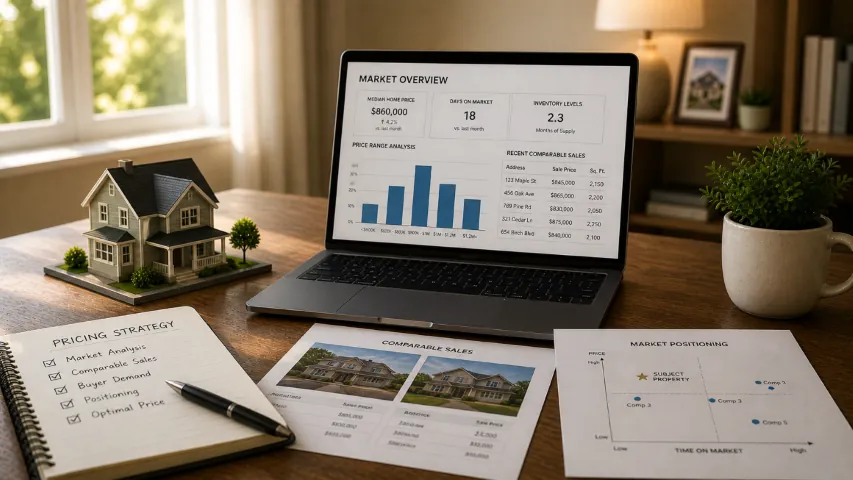
Four numbers can shape a sale, but they do not mean the same thing. The list price is the seller's asking price and a central part of the marketing strategy. Market value is an opinion of what a willing buyer is likely to pay under current conditions. An appraisal is a valuation prepared for a defined purpose by a licensed or certified appraiser. Net proceeds are what remains after payoffs, transaction costs, credits, concessions, repairs, and other obligations.
When those concepts are treated as interchangeable, predictable mistakes follow. A seller's desired net amount does not establish market value. An automated estimate is not a property inspection. A prior appraisal may not reflect current conditions. A list price can influence exposure and negotiation, but it cannot make buyers or lenders accept unsupported value.

Build a Defensible Comparable Set
Comparable sales are not merely homes in the same ZIP code or properties with similar square footage. The strongest comparisons reflect the features that buyers in that market actually value.
A comparative market analysis may consider:
- Recent closed sales as evidence of completed buyer decisions
- Pending sales as an indicator of current demand, recognizing that the final terms may be unknown until closing
- Active listings as the seller's current competition rather than proof of value
- Expired, withdrawn, or canceled listings as evidence of strategies the market did not accept
- Location, subdivision, school district, lot, view, age, construction, floor plan, condition, upgrades, parking, pool, solar, HOA structure, and other property-specific characteristics
The National Association of REALTORS® explains that a CMA can use recently sold, under-contract, and active properties to support a recommended listing price. Its consumer pricing guide also emphasizes property characteristics and current market conditions.
Recent Does Not Always Mean Comparable
A newer sale may be less useful than an older but much more similar sale. Thinly traded luxury, acreage, custom, rural, age-restricted, or highly improved properties may require a broader search and more judgment. The analysis should explain why each comparison was included, what differs, and how much confidence the available evidence supports.
Price Per Square Foot Is a Check, Not a Valuation Method
Price per square foot can be useful when comparing genuinely similar properties, but it can hide major differences in lot, condition, quality, views, garages, pools, functional utility, and location. Applying a neighborhood average mechanically can produce a confident-looking but weak conclusion.
Account for Current Competition and Market Direction
Closed sales describe what buyers agreed to in the recent past. Active and pending competition helps explain what buyers face now. Changes in inventory, mortgage rates, buyer affordability, builder incentives, seasonality, property type, and local supply can make older results less persuasive.
A property should therefore be priced against both historical evidence and today's alternatives. In the Greater Phoenix Area, two similarly sized homes can compete differently because of commute access, community age, builder inventory, HOA structure, school boundaries, lot characteristics, condition, or submarket supply.
Understand Online Search Ranges
Many buyers search with maximum and minimum price filters. A property priced just above a common threshold may not appear in a search capped below that amount. That does not mean every price should end in a particular number, but it does mean the seller should understand which buyer pools a price includes or excludes.
For example, a home at $505,000 may not appear for a buyer who has set a hard maximum of $500,000. A price at $500,000 may appear in searches that end at that amount and searches that begin there, depending on the platform. The correct choice depends on the supported value range, competition, and target buyer—not numerology.
Choose the Strategy Deliberately
There are three broad approaches, each with tradeoffs.
Price Near the Supported Market Range
Pricing within a well-supported range generally gives buyers and brokers a credible reason to engage while preserving room for normal negotiation. This is often the most defensible strategy when the seller values broad exposure and a reliable process.
Price Below the Expected Range
A lower launch price may expand the buyer pool and create urgency in a market with sufficient demand. It does not guarantee multiple offers or a price above the list price. If demand is weaker than expected, the seller may receive only the lower-priced offers the strategy invited.
Price Above the Supported Range
A higher price may be reasonable when the property has features not reflected in the available sales or when the seller has a long timeline and a clear reason to test a limited range. The cost can include fewer searches, fewer showings, appraisal risk, longer market time, and greater buyer leverage.
Testing the market is not free. The first group of active buyers sees the original price and launch presentation. If they reject the value proposition, a later reduction may not recreate the same attention.
Coordinate Price With Condition, Marketing, and Terms
Price cannot be evaluated in isolation from what the buyer receives and how the property is presented.
A move-in-ready home with strong photography, convenient access, complete records, and flexible terms may justify different positioning than a property needing substantial work. A seller may also choose between repairs, credits, concessions, rate-buyer assistance, included personal property, or a lower price. Those choices affect buyer affordability, net proceeds, appraisal risk, and marketing language differently.
The NAR consumer guide to marketing a home identifies competitive pricing as part of expanding the pool of interested buyers. Pricing and marketing should therefore be designed together rather than assigned to separate conversations.
Use the Launch Period as Evidence
The initial market response can test whether the combined price, condition, presentation, access, and terms are competitive.
Useful signals include qualified showing volume, repeat visits, saved-listing activity, broker questions, offer quality, competing sales, new listings, and consistent feedback. A lack of offers does not prove that price is the only problem, but persistent weak response requires an explanation.
Feedback should be weighted. One buyer's color preference is not a pricing conclusion. Repeated concern about condition, layout, road noise, insurance, solar terms, or value compared with alternatives is more meaningful.

Price Reductions Should Be Strategic
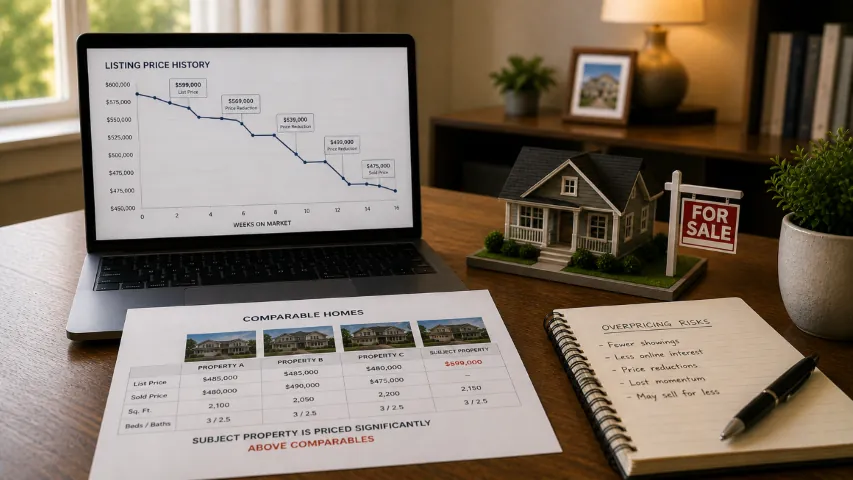
A reduction should move the property into a materially different competitive position or search range. Small repeated reductions can signal uncertainty without changing the buyer pool. A large reduction made without correcting poor photography, access, condition, or inaccurate listing information may also fail.
Before changing price, review:
- New closed and pending evidence
- Current active competition and builder incentives
- Showing and offer patterns
- Property condition and presentation
- Access restrictions
- Buyer affordability and financing conditions
- Seller concessions and other terms
- The seller's remaining timeline and net-proceeds requirements
The appropriate response may be to reduce, improve, change terms, temporarily withdraw, or maintain the strategy when the evidence supports patience. Let current market response drive that decision rather than an automatic calendar rule.
Unique Properties Need a Range and a Confidence Level
Custom homes, acreage, unusual improvements, luxury properties, mixed-use features, substantial solar systems, guest houses, or properties in thin submarkets may not have a clean set of comparisons. In those cases, a responsible analysis presents a range, identifies assumptions, and explains uncertainty.
An independent appraisal may be useful for estate, litigation, lending, tax, or difficult-pricing purposes, but the appraiser's assignment and effective date matter. A pre-listing appraisal does not guarantee that a future buyer's lender appraisal will reach the same conclusion.
CMA, Automated Estimate, and Appraisal
A comparative market analysis is prepared by a real estate professional to support pricing or offer strategy using market and property evidence. An automated valuation model estimates value from available data and algorithms but may not recognize current condition, views, improvements, functional issues, or unusual obligations. An appraisal is an independent valuation performed for a defined client and purpose under appraisal standards.
Each can provide information. None should be presented as an infallible prediction of the final sale price.

Frequently Asked Questions
Should I list high so there is room to negotiate?
Only when the evidence and seller's objectives support that risk. Buyers may not view or offer on a property they consider materially overpriced, leaving no negotiation to conduct. The relevant question is whether the additional asking price improves expected net results after accounting for reduced exposure and time.
Does pricing below market guarantee a bidding war?
No. Multiple offers require enough qualified demand relative to the property and terms. A low list price can create activity, but it can also produce offers near the lower price or create seller expectations the market does not meet.
Are active listings comparable sales?
No. Active listings show current competition and seller expectations. Closed sales show completed transactions. Pending listings can indicate current acceptance, but their final price and concessions may remain unknown until closing.
How much weight should I give an online home-value estimate?
Use it as one data point. Automated estimates can be useful where records and comparable properties are consistent, but they may miss condition, renovations, location nuances, views, lot characteristics, solar or lease obligations, and other facts that require property-level review.
When should a seller reduce the price?
There is no universal day count. A reduction becomes reasonable when current evidence shows the property is not competitive and the seller's objective requires a change. The amount should be large enough to alter the property's position rather than merely acknowledge weak response.
Can the seller's required net proceeds determine the list price?
They can influence whether selling is feasible, but they do not determine what buyers will pay. Estimate proceeds early, then compare the seller's requirement with a supportable value range and alternative choices.
Pricing With Discipline
A strong pricing recommendation does not promise the maximum imaginable price. It identifies the range supported by current evidence, explains the risks of each strategy, and gives the seller a plan for interpreting new information after launch.
The seller remains the decision-maker. The broker's responsibility is to provide the market evidence, property analysis, exposure strategy, negotiation context, and candid advice needed to make that decision knowingly.
Continue Learning
Previous: Selling a Home
Next: Investing Basics
For a property-specific analysis, request a Home-Value and Pricing Review.
Back to: Consumer Education Hub