
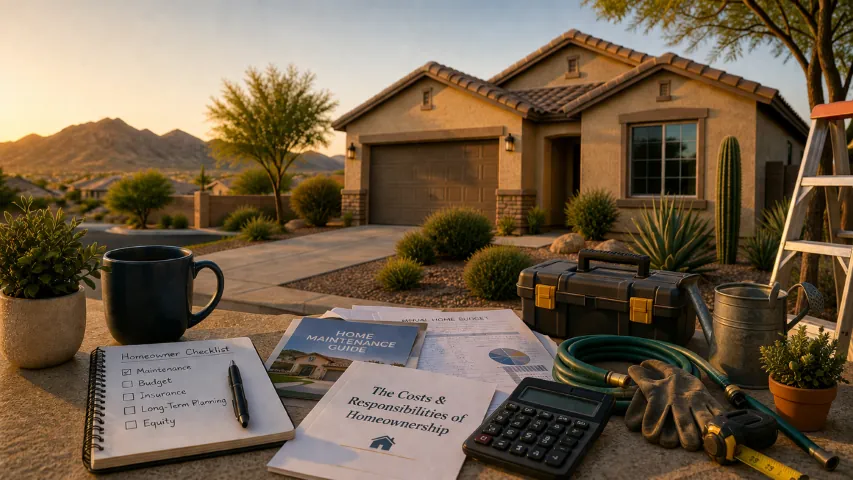

Build an Ownership Operating Plan
Homeownership becomes easier to manage when you treat its costs and responsibilities as an operating plan rather than a series of surprises. That plan should identify recurring obligations, likely component replacements, routine maintenance, available reserves, important records, and the people to call when a problem exceeds your knowledge.
Build an ownership file that you can use later. It may include the inspection report, seller disclosures, closing documents, title policy, survey where applicable, HOA materials, insurance policy, warranties, manuals, receipts, permit records, contractor information, photographs, and a schedule of major systems.
Understand the Complete Cost of Ownership
The mortgage payment is only one component. The Consumer Financial Protection Bureau notes that owners remain responsible for maintenance and repairs and should maintain an emergency fund for unexpected expenses. Its financial considerations for homeownership are a useful starting point.

Recurring Costs
Recurring obligations may include principal and interest, property taxes, homeowners and supplemental insurance, mortgage insurance, HOA or condominium assessments, utilities, landscaping, pool service, pest control, security, and routine maintenance.
Some costs are escrowed through the mortgage payment; others are paid directly. Escrow does not make a cost fixed. Taxes, insurance premiums, HOA charges, and utility expenses can change over time.
Irregular and Capital Costs
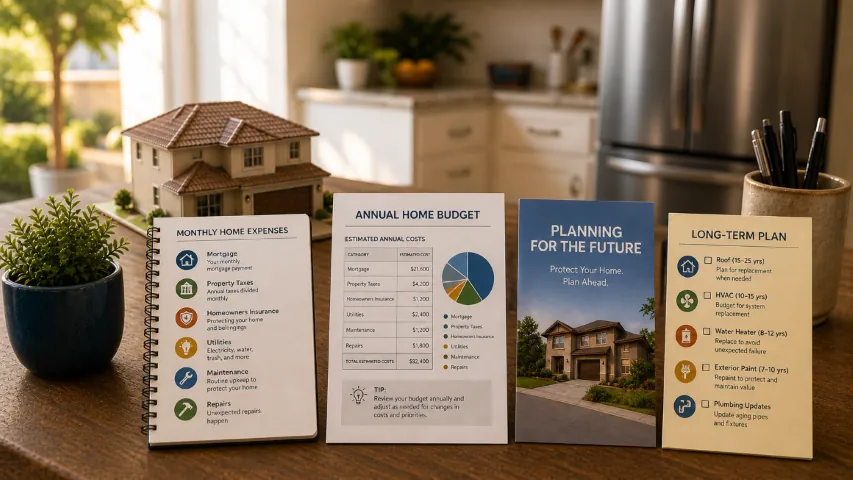
Roofs, HVAC systems, water heaters, appliances, plumbing, electrical equipment, exterior finishes, windows, pools, and other components have finite lives. Owners should estimate likely timing and cost rather than assuming a general maintenance percentage will accurately describe the property.
A new home may have fewer near-term replacements but can still require landscaping, window treatments, appliances, warranty follow-up, and HOA or community expenses. An older home may need larger reserves even when the purchase inspection did not reveal an immediate failure.
Reserves
No universal reserve formula works for every home. The appropriate amount depends on property age, condition, system life, deductibles, HOA obligations, household cash flow, and access to other liquidity.
A component-based reserve plan is usually more defensible than relying only on a rule such as one percent of value. A high-value newer home and a lower-value older home can have very different repair exposure even when a percentage calculation suggests otherwise.
Maintain the Property Before Small Problems Compound
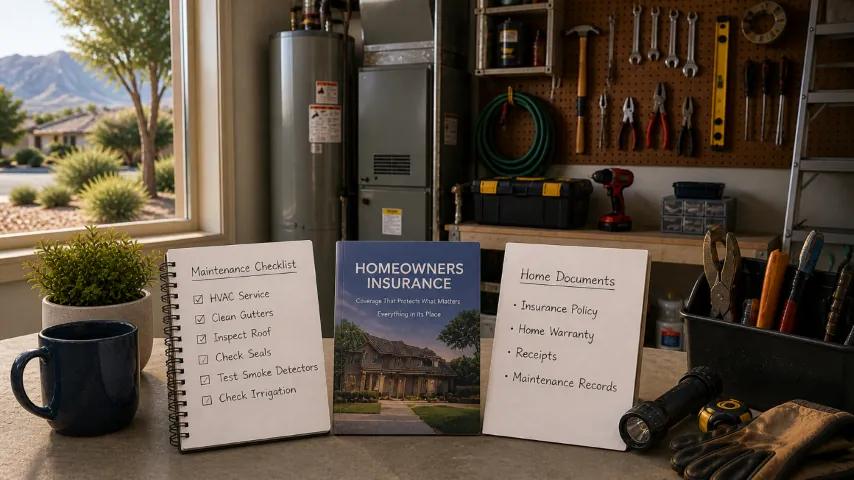
Routine maintenance protects functionality, safety, comfort, and resale condition. The exact schedule should reflect the property, manufacturer guidance, climate, and contractor recommendations.
In the Greater Phoenix Area, owners commonly need to pay close attention to:
- HVAC service, filters, condensate drainage, and summer performance
- Roof coverings, flashing, underlayment, and storm-related observations
- Exterior sealants, paint, stucco cracks, and water intrusion points
- Irrigation leaks, landscaping, drainage, and monsoon preparation
- Pool and spa equipment where present
- Pest activity, including termites
- Plumbing fixtures, water heaters, shutoff valves, and hard-water effects
- Smoke and carbon-monoxide alarms
- Garage doors, safety sensors, and exterior access
This is not a substitute for professional maintenance or inspection. It illustrates why an owner should know the home’s systems and maintain a calendar before a visible failure creates urgency.
Insurance and Risk Management
Homeowners insurance should be reviewed rather than renewed automatically without attention. Coverage limits, deductibles, exclusions, endorsements, replacement-cost assumptions, personal-property limits, liability, vacancy, rental use, home-business activity, pools, solar equipment, renovations, and flood exposure can all affect coverage.
A lender’s minimum insurance requirement is not necessarily the owner’s ideal risk-management plan. Owners should report material property or use changes to the insurer and seek qualified insurance advice.
Insurance is also a marketability issue. A property that is difficult or expensive to insure can affect refinancing, buyer demand, and future transaction timing.
Property Taxes and HOA Obligations
Arizona property-tax bills and parcel information are administered through county systems. The Arizona Department of Revenue explains that owners can obtain property-tax bills through the applicable county treasurer. Owners should review actual parcel records rather than relying only on a citywide average or the prior owner’s monthly estimate.
HOA and condominium ownership can involve regular assessments, special assessments, use restrictions, architectural controls, insurance responsibilities, rental limits, reserve funding, and enforcement procedures. Owners should retain governing documents and monitor notices, budgets, meeting materials, insurance changes, and proposed assessments.
Low current dues do not necessarily prove that an association is well funded. Owners should understand what the association maintains, what remains the individual owner’s responsibility, and how major common-area work is funded.
Keep Records That Support Future Decisions
Good records reduce uncertainty when filing an insurance claim, maintaining a warranty, planning a repair, refinancing, renting, or selling.
Retain documentation for:
- Repairs and replacements
- Permits and approvals
- Contractor invoices and warranties
- Insurance claims
- HOA approvals
- Solar or equipment agreements
- Capital improvements
- Maintenance history
- Tax and legal records as advised by qualified professionals
Photographs taken before and after major work can help establish condition and scope. Organized records can also make later buyer due diligence more efficient.
Equity Is Not the Same as Available Cash
Home equity changes with market value, loan balance, transaction costs, and property condition. It is not guaranteed to rise each year, and it is not liquid until the owner sells, refinances, or uses another financing structure.
Owners should avoid treating estimated equity as cash already available for spending. Accessing equity creates costs, underwriting requirements, repayment obligations, or a reduction in sale proceeds.
A home can appreciate while still producing a weak financial outcome if carrying costs, repairs, leverage, and transaction expenses are ignored. Conversely, a home can provide substantial housing stability and utility even when short-term appreciation is limited.
Reassess the Property as Life Changes
Ownership is not a permanent instruction to hold the property regardless of circumstances. Periodic review should consider whether the home still fits the owner’s budget, household, work, mobility, maintenance capacity, and broader financial objectives.
Refinance
A refinance may change the rate, payment, loan term, cash position, or risk profile. Closing costs, break-even period, total interest, reset amortization, prepayment plans, and the owner’s expected holding period should be considered—not only the new monthly payment.
Renovate
Renovations can improve use and enjoyment, but cost and resale value are not the same. Owners should evaluate scope, permitting, contractor risk, disruption, financing, insurance, neighborhood fit, and whether moving would better solve the underlying problem.
Rent the Home
Converting a residence to a rental can create income potential, but it also introduces landlord duties, vacancy, repairs, management, insurance, tax, legal, HOA, and financing considerations. Owners should not assume that rent exceeding the mortgage payment means the property will operate profitably.
Sell, Downsize, or Relocate
A sale may release equity, reduce maintenance, change location, or improve flexibility. Compare likely proceeds, repairs, timing, replacement housing, taxes, moving costs, and the practical consequences of staying versus moving.
Recognize When Ownership Is Becoming a Constraint
Warning signs include deferred maintenance, repeated use of debt for ordinary repairs, rising costs that displace essential savings, inability to insure the property appropriately, an unsuitable location or layout, or a home that requires more time and physical effort than the owner can reasonably provide.
Recognizing a mismatch is not a failure. It creates time to compare options before a crisis, forced sale, major uninsured loss, or accumulated deterioration narrows the choices.
Frequently Asked Questions
How much should I budget for home maintenance?
There is no universally reliable percentage. Start with the home’s age, inspection findings, roof and HVAC life, plumbing and electrical condition, pool or landscape systems, deductibles, and likely major replacements. A general percentage can be a rough screen, but a component schedule is more useful.
How often should major systems be serviced?
Follow manufacturer guidance and qualified contractor recommendations. Frequency depends on equipment, age, use, climate, water quality, and condition. In Greater Phoenix, HVAC performance and drainage deserve particular attention before peak summer demand.
Why can property taxes and insurance change even with a fixed-rate mortgage?
A fixed rate stabilizes principal-and-interest terms, not taxes, insurance, HOA charges, or maintenance. Escrow payments can change when the servicer updates projected taxes and insurance.
Should I rely on a home warranty instead of reserves?
No. A warranty is a contract with covered items, exclusions, service fees, limits, and claim procedures. It may be useful in some circumstances, but it does not cover every failure or replace maintenance, insurance, or cash reserves.
Can I rent the home if my plans change?
Possibly. Review loan occupancy terms, HOA or condominium restrictions, local rules, insurance, taxes, licensing where applicable, property condition, and management requirements before converting the use.
When should I start preparing to sell?
Ideally before a move becomes urgent. Early planning allows time to evaluate repairs, records, market conditions, estimated proceeds, replacement housing, and the financial consequences of selling versus holding.
Continue Learning
Previous: Arizona Home Inspections
Next: Selling a Home
Related guidance: Financial Wellness Through Real Estate Decisions
Back to: Consumer Real Estate Education