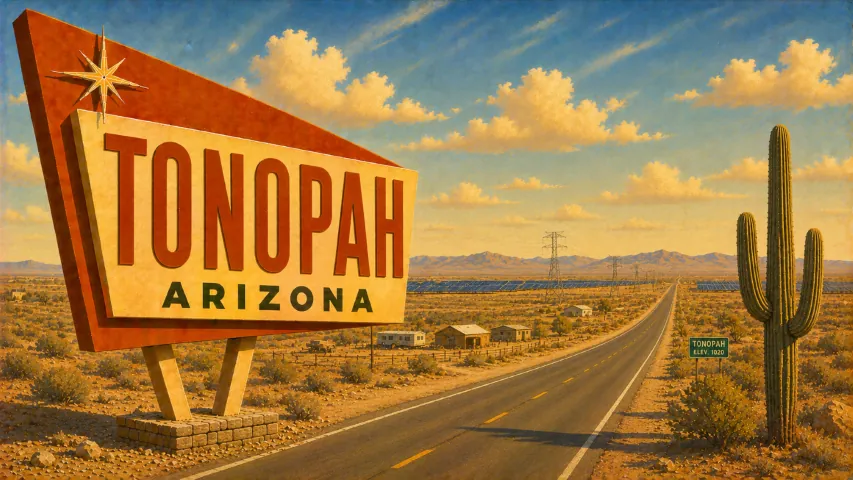
Tonopah is a broad rural mailing and planning area, not a conventional town-centered housing market. I-10 access, wells, septic, power, roads, flood and wash conditions, industrial or energy uses, and distance to services create the principal property distinctions.
Tonopah service core and established rural homes
Housing context: Scattered site-built and manufactured homes, small acreage, and limited local services near the recognized community center.
Property review: Verify title and affixture for manufactured homes, well and septic records, legal access, road maintenance, power and internet, property condition, zoning, and distance to emergency and daily services.
I-10 interchange and freeway-access parcels
Housing context: Rural housing, commercial or industrial-edge property, and land whose utility is strongly influenced by freeway access.
Property review: Evaluate safe ingress and egress, traffic and noise, blowing dust, surrounding land use, environmental records, flood and drainage, road projects, and whether utilities are actually available.
Wintersburg Road, Salome Highway and outlying acreage
Housing context: Large rural parcels, agricultural or horse properties, manufactured housing, and off-grid or lightly served land.
Property review: Confirm legal access and maintenance, well depth and production, septic feasibility, power-extension or solar systems, flood and wash crossings, zoning, wildfire response, and realistic travel times.
Large vacant and development tracts
Housing context: Unimproved land where title, survey, access, water, infrastructure, environmental conditions, and entitlement feasibility drive value.
Property review: Do not infer development potential from parcel size or nearby announcements; require title and survey, zoning, water analysis, septic or wastewater feasibility, power costs, environmental review, and a current development plan.